VirusTotal
6 / 91
Segnala


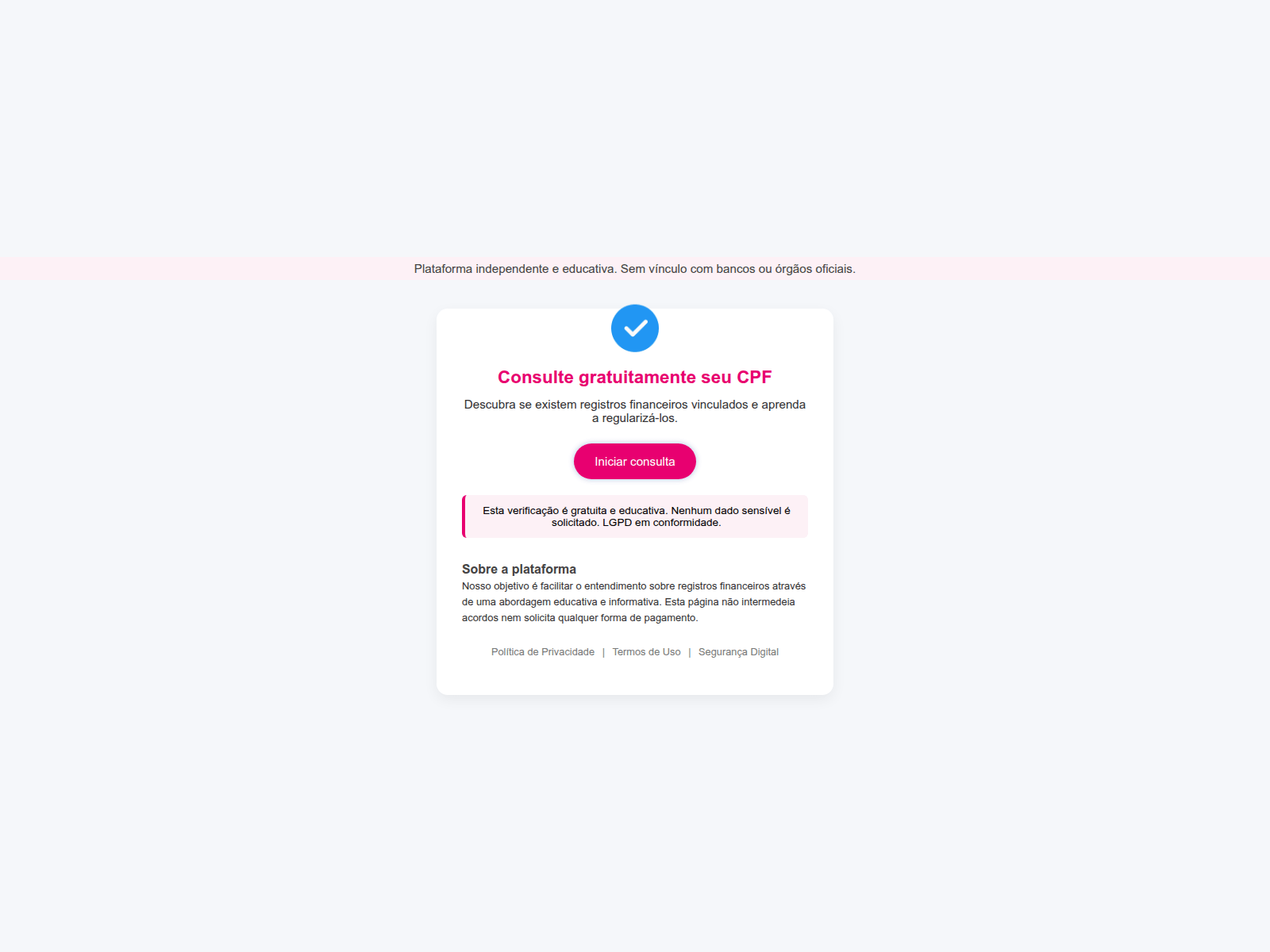
“Consulta Nacional de CPF – Regularização Educativa”
pesquisabr.online — Contenuto non disponibile. Tipo di truffa: Generic Phishing. Riepilogo delle prove: VirusTotal 6/91 (ESET, Forcepoint ThreatSeeker, Gridinsoft, Kaspersky, OpenPhish); URLQuery 2 det.; CF Radar malicious; PhishDestroy score 85/100. Registrar: NameCheap.
L’analisi dettagliata di PhishDestroy AI resta in inglese per preservare il rapporto forense originale.

The domain pesquisabr.online is classified as high-risk and represents a generic phishing threat, specifically impersonating a government service related to CPF (Cadastro de Pessoa Física) regularization. The fraudulent nature of this domain necessitates immediate attention to mitigate potential harm to users who may unwittingly engage with the site.
Analysis reveals that VirusTotal flags this domain with a detection rate of 5 out of 95 security vendors, indicating a concerning level of consensus on its malicious intent. The domain resolves to IP address 154.53.35.92, which may be associated with other similar phishing operations. While the SSL certificate is issued by Let's Encrypt, a common feature among phishing sites, this should not be construed as indicative of legitimacy. The registrar information has not been provided, yet knowledge of ownership can further aid in risk assessment. Current intelligence suggests that this domain is actively used for deceptive purposes, raising significant alarm regarding user safety.
To mitigate the risks associated with pesquisabr.online, users should be educated on recognizing phishing attempts, especially those masquerading as government services. Organizations should implement network security measures that include URL filtering and automated threat detection systems that monitor for known bad domains. Additionally, conducting frequent training sessions on cybersecurity awareness can empower users to identify and report potential threats. The use of multi-factor authentication for accessing sensitive services can also add a layer of protection against phishing attempts.
Osservazioni archiviate relative al confronto tra crawler e browser per questo host, oltre a una verifica in tempo reale delle impronte digitali per i sistemi di distribuzione del traffico in stile Keitaro.
Nota dello scanner: unavailable: raw=connection_error; http=0; via=http_proxy; error=SOCKSHTTPConnectionPool(host='pesquisabr.online', port=80): Max retries exceeded with url: / (Caused by NewConnectionErr
For this gTLD, the registrar above operates under an ICANN accreditation agreement. The links below provide the official fee schedule and current DNS abuse compliance guidance.
RAA §3.18 establishes abuse-contact and handling requirements. This report can document stored outbound notices and later technical observations; it does not by itself establish receipt, investigation, remediation, or contractual non-compliance.
La reputazione Edge-IP non è attribuita a questo dominio.
dns2.registrar-servers.comLocation describes the IP network.
266ebd432b109ce300049fe952d8fb61656bd6d870717347e7d27897881f0668Saved certificate metadata. Certificate dates without a timezone are shown as stored. Transport encryption does not establish that the site is trustworthy.
Google PageSpeed Insights — mobile performance audit of pesquisabr.online · checked Jun 29, 2026
12 recorded events. These records describe collected evidence, outgoing notifications and publication; they do not confirm a complete investigation or a takedown.
We scan suspicious URLs, inspect public results and send evidence through the appropriate abuse-reporting channels. The dated events above show what is recorded for this domain. The directory below explains the wider workflow.
Capture the rendered page, requests and visible infrastructure.
Compare the available engine results and retain the analysis timestamp.
Check whether Google currently lists the URL as unsafe.
Inspect a public scan and its recorded network and classification data.
Look for indicator references and related community intelligence.
Compare archived captures and preserve historical context.
Look for matching indicators and associated threat records.
Inspect certificate records and related hostnames.
Compare security resolver responses and record observed blocking.
Inspect the public DNS, TLS, HTTP and technology surface.
Security services used for scanning, reputation checks and reporting are listed below. A service being listed is not evidence that it received, accepted or acted on this particular domain. Recorded submissions appear in the notification history above.
PD-20260629-0B640D Recipient: abuse@cogentco.com Policy Violations: Illegal Activities: Active phishing operation targeting victims Fraud & Deception: Impersonation of legitimate services Identity Theft: Collection of credentials under false pretenses Applicable Laws (Unknown): International Anti-Cybercrime Regulations Budapest Convention on Cybercrime Universal Fraud Prevention Laws Phishing activities violate international cybercrime conventions and Unknown's domestic fraud laws. Action Required: This evidence-backed report demonstrates clear violations requiring suspension per your policies. Continued hosting exposes your organization to regulatory scrutiny and potential legal liability.
Se hai inserito credenziali dell'account, informazioni personali o di pagamento oppure hai scaricato un file da questo dominio, agisci immediatamente. Di seguito sono riportate le risorse per aiutarti a segnalare l'incidente e proteggerti.


Seleziona il tuo Paese per ottenere contatti ufficiali del crimine informatico o creare una bozza di reclamo →.
Template-based draft · optional AI wording assistance requires separate consent
Ogni riga rappresenta un motivo per cui un dominio è collegato a questo host. I nodi a dimensione intera indicano rilevamenti di VirusTotal, mentre quelli tratteggiati sono già offline. Di seguito è riportato l'elenco completo.
Stesso hash della favicon o stesso titolo della pagina di questo host.
Registrati tramite lo stesso registrar. Un registrar serve milioni di clienti non collegati tra loro, quindi questo dato indica semplicemente un raggruppamento piuttosto che dimostrare un nesso.
Rapporti aggiunti di recente dal database PhishDestroy. Questi collegamenti di scoperta non implicano infrastrutture o proprietà condivise.
Analisi delle minacce utilizzando blocklist archiviate, WHOIS, DNS e prove di scansione pubblica
Scansiona oraSegnala i domini sospetti al nostro database delle minacce — proteggi la comunità
SegnalaSegnalazioni recenti di phishing e modifiche osservate della disponibilità
MonitoraControlla le minacce in tempo reale oppure contesta questa segnalazione se ritieni che si tratti di un falso positivo