VirusTotal
11 / 89
Segnala

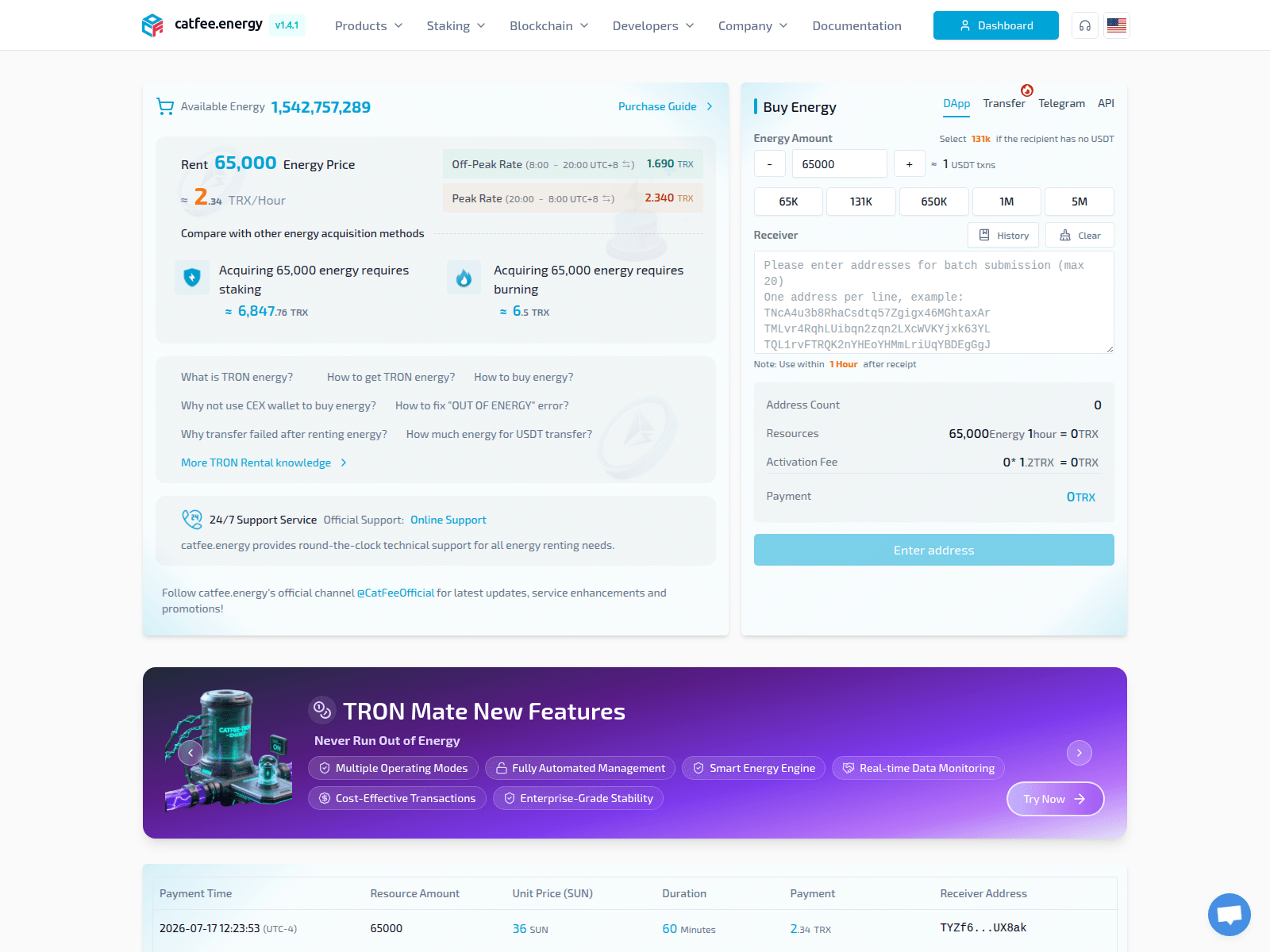
“Buy and Sell TRON Energy | Rent TRX Energy | CatFee”
The sent-report ledger records the first outgoing report at .
The recorded recipient is complaint@gname.com.
The latest stored availability evidence still shows the domain reachable; 2 months has elapsed since the first outgoing report.
ICANN RAA §3.18 describes registrar abuse-contact and handling obligations. This section records outgoing timestamps, listed recipients, case identifiers, and later availability. It does not by itself prove receipt, acknowledgement, investigation, remediation, or contractual non-compliance.
catfee.energy — Ultimo attivo conosciuto (HTTP 200). Simulazione del marchio: Binance; Tipo di truffa: Crypto Drainer. Riepilogo delle prove: VirusTotal 11/89 (alphaMountain.ai, BitDefender, CRDF, CyRadar, Forcepoint ThreatSeeker); Spamhaus DBL_PHISH; 2 external blocklist matches (MetaMask, SEAL); PhishDestroy score 100/100. Registrar: GNAME.COM.
L’analisi dettagliata di PhishDestroy AI resta in inglese per preservare il rapporto forense originale.

11 / 89
DBL_PHISH
checked — no detections recorded
Segnala4 community references
Segnalaprovider verdict: clean
Segnalarapporto memorizzato
 Segnala
 Analisi completata
Segnala80/100
SegnalaChecked; no threat flag recorded
SegnalaAnalysis of the domain catfee.energy, observed on August 04 2026, shows limited public intelligence but several indicators of compromise. The domain was submitted to VirusTotal where 91 scanning engines examined the site; none reported a detection at the time of analysis. While a clean result might suggest an absence of known malware signatures, the lack of detections does not constitute evidence of legitimacy, especially given the domain’s appearance on a security blocklist. The blocklist entry is corroborated by PhishDestroy, which has actively blocked catfee.energy and classified it as a phishing resource.
No additional data such as registrar details, hosting IP, SSL certificate information, HTTP response codes, or page‑title metadata are currently available in the intelligence feed. Consequently, the infrastructure behind the domain remains opaque, and the specific brand or service being spoofed cannot be identified from the existing artifacts. Defenders should treat catfee.energy as a high‑confidence malicious indicator. Immediate mitigation steps include adding the domain to outbound and inbound deny lists across firewalls, proxy servers, and DNS filtering solutions.
Security information and event management (SIEM) rules should be updated to flag any DNS queries, HTTP requests, or email links containing the domain. Continuous monitoring of threat‑intel feeds for new indicators—such as IP address associations, SSL certificate changes, or emerging blocklist entries—will help refine detection capability. Because the domain has already been flagged by PhishDestroy, organizations employing that service will benefit from automatic blocking, but independent controls remain advisable. Until further forensic evidence is gathered, the recommendation is to maintain a strict deny‑list posture for catfee.energy and to educate end‑users about unsolicited communications that might reference the domain.
Full extracted values, their blockchain and collection source. An address found in page content does not establish who controls it.
TMLvr4RqhLUibqn2zqn2LXcWVKYjxk63YLFormat validated · Domain analysisTNcA4u3b8RhaCsdtq57Zgigx46MGhtaxArFormat validated · Domain analysisTQL1rvFTRQK2nYHEoYHMmLriUqYBDEgGgJFormat validated · Domain analysisIoC extraction recorded 2026-08-04 04:00:12 UTC
Osservazioni archiviate relative al confronto tra crawler e browser per questo host, oltre a una verifica in tempo reale delle impronte digitali per i sistemi di distribuzione del traffico in stile Keitaro.
ddos-guardNota dello scanner: alive_content: raw=ok; http=200; via=https_proxy; server=ddos-guard
For this gTLD, the registrar above operates under an ICANN accreditation agreement. The links below provide the official fee schedule and current DNS abuse compliance guidance.
RAA §3.18 establishes abuse-contact and handling requirements. This report can document stored outbound notices and later technical observations; it does not by itself establish receipt, investigation, remediation, or contractual non-compliance.
a.share-dns.comb.share-dns.netLocation describes the IP network.
b887175cdd01788690ceed65683a943054d116dae8e03871932cd8db376c073dSaved certificate metadata. Certificate dates without a timezone are shown as stored. Transport encryption does not establish that the site is trustworthy.
186.2.175.25. 13 recorded events. These records describe collected evidence, outgoing notifications and publication; they do not confirm a complete investigation or a takedown.
We scan suspicious URLs, inspect public results and send evidence through the appropriate abuse-reporting channels. The dated events above show what is recorded for this domain. The directory below explains the wider workflow.
Capture the rendered page, requests and visible infrastructure.
Compare the available engine results and retain the analysis timestamp.
Check whether Google currently lists the URL as unsafe.
Inspect a public scan and its recorded network and classification data.
Look for indicator references and related community intelligence.
Compare archived captures and preserve historical context.
Look for matching indicators and associated threat records.
Inspect certificate records and related hostnames.
Compare security resolver responses and record observed blocking.
Inspect the public DNS, TLS, HTTP and technology surface.
Security services used for scanning, reputation checks and reporting are listed below. A service being listed is not evidence that it received, accepted or acted on this particular domain. Recorded submissions appear in the notification history above.
187 domini simili memorizzati
Visualizzati 100 di 187
PD-20260804-8C56C5 Recipient: complaint@gname.com Registrar: Gname.com Pte. Ltd. (Singapore) Policy Violations: Illegal Activities section forbids phishing, fraud, fake sites, malware distribution; registrar investigates and may suspend or delete domain Applicable Laws: Computer Misuse Act 1993 §§3+, Penal Code §§415–420 (cheating), Online Criminal Harms Act (OCHA)
Se hai inserito credenziali dell'account, informazioni personali o di pagamento oppure hai scaricato un file da questo dominio, agisci immediatamente. Di seguito sono riportate le risorse per aiutarti a segnalare l'incidente e proteggerti.


Seleziona il tuo Paese per ottenere contatti ufficiali del crimine informatico o creare una bozza di reclamo →.
Template-based draft · optional AI wording assistance requires separate consent
Ogni riga rappresenta un motivo per cui un dominio è collegato a questo host. I nodi a dimensione intera indicano rilevamenti di VirusTotal, mentre quelli tratteggiati sono già offline. Di seguito è riportato l'elenco completo.
Stesso hash della favicon o stesso titolo della pagina di questo host.
Questo IP di origine ospita più domini di phishing: l'infrastruttura può essere condivisa tra campagne.
Questi domini prendono di mira anche gli utenti di Binance. Visualizza tutte le minacce relative a "Binance" →
Registrati tramite lo stesso registrar. Un registrar serve milioni di clienti non collegati tra loro, quindi questo dato indica semplicemente un raggruppamento piuttosto che dimostrare un nesso.
Rapporti aggiunti di recente dal database PhishDestroy. Questi collegamenti di scoperta non implicano infrastrutture o proprietà condivise.
Analisi delle minacce utilizzando blocklist archiviate, WHOIS, DNS e prove di scansione pubblica
Scansiona oraSegnala i domini sospetti al nostro database delle minacce — proteggi la comunità
SegnalaSegnalazioni recenti di phishing e modifiche osservate della disponibilità
MonitoraControlla le minacce in tempo reale oppure contesta questa segnalazione se ritieni che si tratti di un falso positivo