stake217.cc
  mellgamers.cc
  stakegm.cc
  wtnforum.net
  onion.live
  darkdotweb.com
  pulsenotch.com
IC3 del FBI
Denunciar delitos cometidos a través de Internet en los Estados Unidos
Federal tips line1-800-CALL-FBI
The sent-report ledger records the first outgoing report at . A report was sent to the recorded registrar; contact details remain in Domain Intelligence. The latest stored availability evidence still shows the domain reachable; 5 months has elapsed since the first outgoing report.
ICANN RAA §3.18 describes registrar abuse-contact and handling obligations. This section records outgoing timestamps and later availability. It does not by itself prove receipt, acknowledgement, investigation, remediation, or contractual non-compliance.

“Cartão de Crédito”
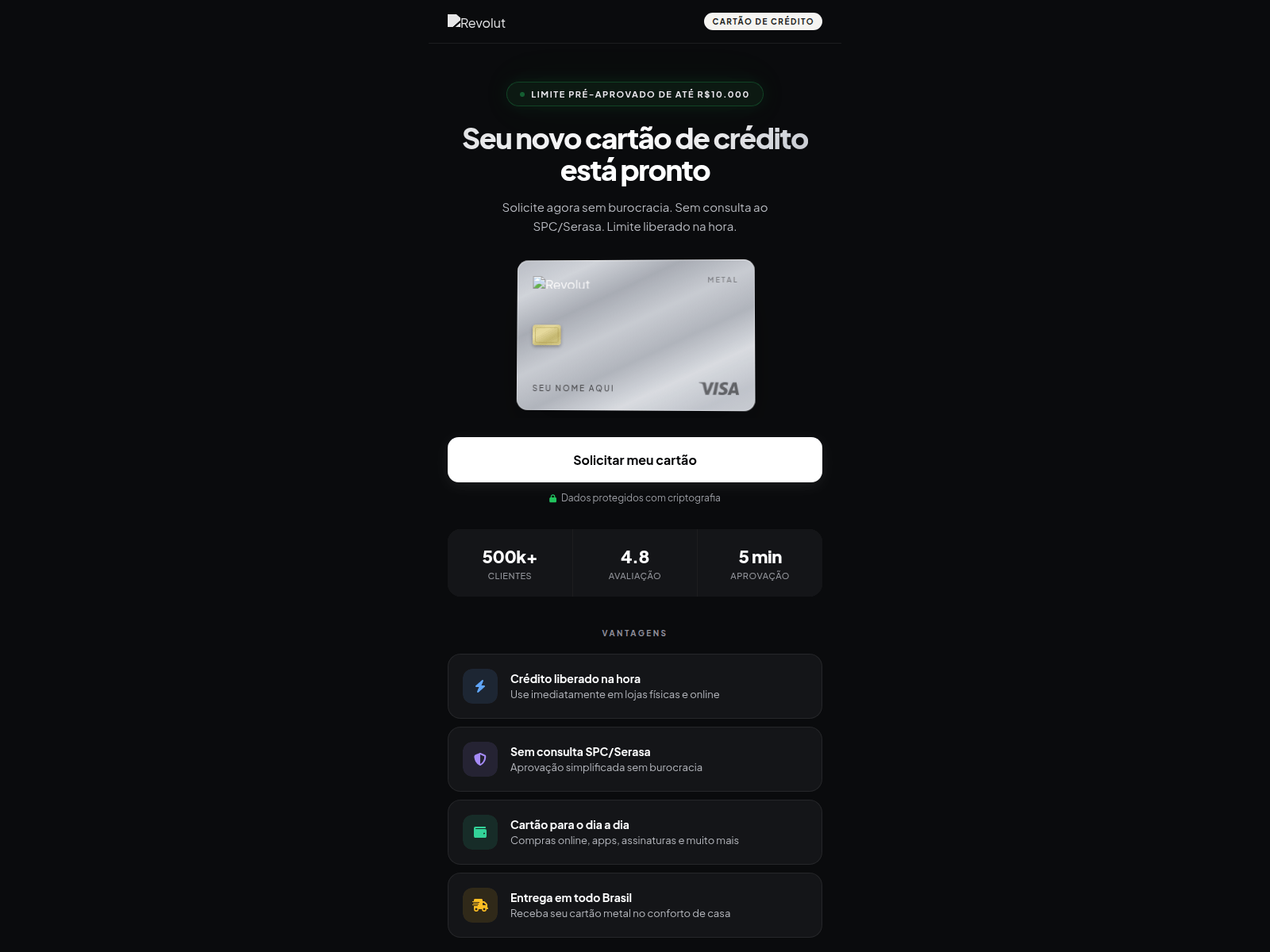
revseguro.com was observed serving a page titled “Cartão de Crédito” and returned HTTP 200 responses before being taken offline. The site employed a Let’s Encrypt certificate (E7) and was hosted on an Nginx server. DNS resolution pointed to 79.133.41.108, an address allocated to AS214036 (Ultahost, Inc.) in Germany. The domain was registered on 11 March 2026 through Dynadot LLC and uses four CloudNS nameservers (pns61.cloudns.net, pns62.cloudns.com, pns63.cloudns.net, pns64.cloudns.u…). Security vendors have flagged the domain; one of ninety‑five VirusTotal scanners reported it as malicious, and it appears on a single public blocklist.
PhishDestroy has also listed the domain as a phishing source. No additional intelligence such as a targeted brand or payload details is publicly available, and the site is no longer reachable, limiting real‑time analysis of its content. The page title in Portuguese implies a credential‑harvesting page aimed at Portuguese‑speaking users seeking credit‑card services. Defenders should block the IP address 79.133.41.108 and add revseguro.com to URL filtering and sinkhole rules.
Monitoring of the associated nameservers and the registration record for changes is advised, as the infrastructure could be reused for future campaigns. Because the certificate is publicly trusted, network‑level inspection of TLS handshakes may be required to detect similar domains that use Let’s Encrypt for short‑lived phishing sites. The single blocklist listing, combined with the VirusTotal flag, indicates that the domain has already been identified by threat‑intelligence feeds, but the limited detection count suggests it was either short‑lived or not widely distributed. The lack of further artifacts suggests a stand‑alone campaign rather than a larger botnet, but analysts should remain vigilant for other domains resolving to the same IP or sharing the same nameserver set.
PD-20260311-12578D
10 fuentes externas supervisadas · instantánea del 11/08/2026
 (US)
(US)

For this gTLD, the registrar above operates under an ICANN accreditation agreement. The links below provide the official fee schedule and current DNS abuse compliance guidance.
RAA §3.18 establishes abuse-contact and handling requirements. This report can document stored outbound notices and later technical observations; it does not by itself establish receipt, investigation, remediation, or contractual non-compliance.
1 tecnología identificada con alta confianza
Google PageSpeed Insights — mobile performance audit of revseguro.com · checked Mar 11, 2026
Informes agregados recientemente de la base de datos PhishDestroy. Estos enlaces de descubrimiento no implican infraestructura ni propiedad compartida.
Si ingresó credenciales de cuenta, información personal o de pago, o descargó un archivo de este dominio, tome medidas inmediatas. A continuación encontrará recursos que le ayudarán a informar el incidente y protegerse.

Seleccione su país para obtener contactos oficiales de cibercrimen o crear un borrador de queja →.
Análisis de amenazas utilizando listas de bloqueo almacenadas, WHOIS, DNS y evidencia de escaneo público
Escanear ahoraEnvía los dominios sospechosos a nuestra base de datos de amenazas: protege a la comunidad
DenunciarInformes de phishing recientes y cambios de disponibilidad observados
MonitorizarSupervisa las amenazas en tiempo real o impugna esta entrada si crees que se trata de un falso positivo.