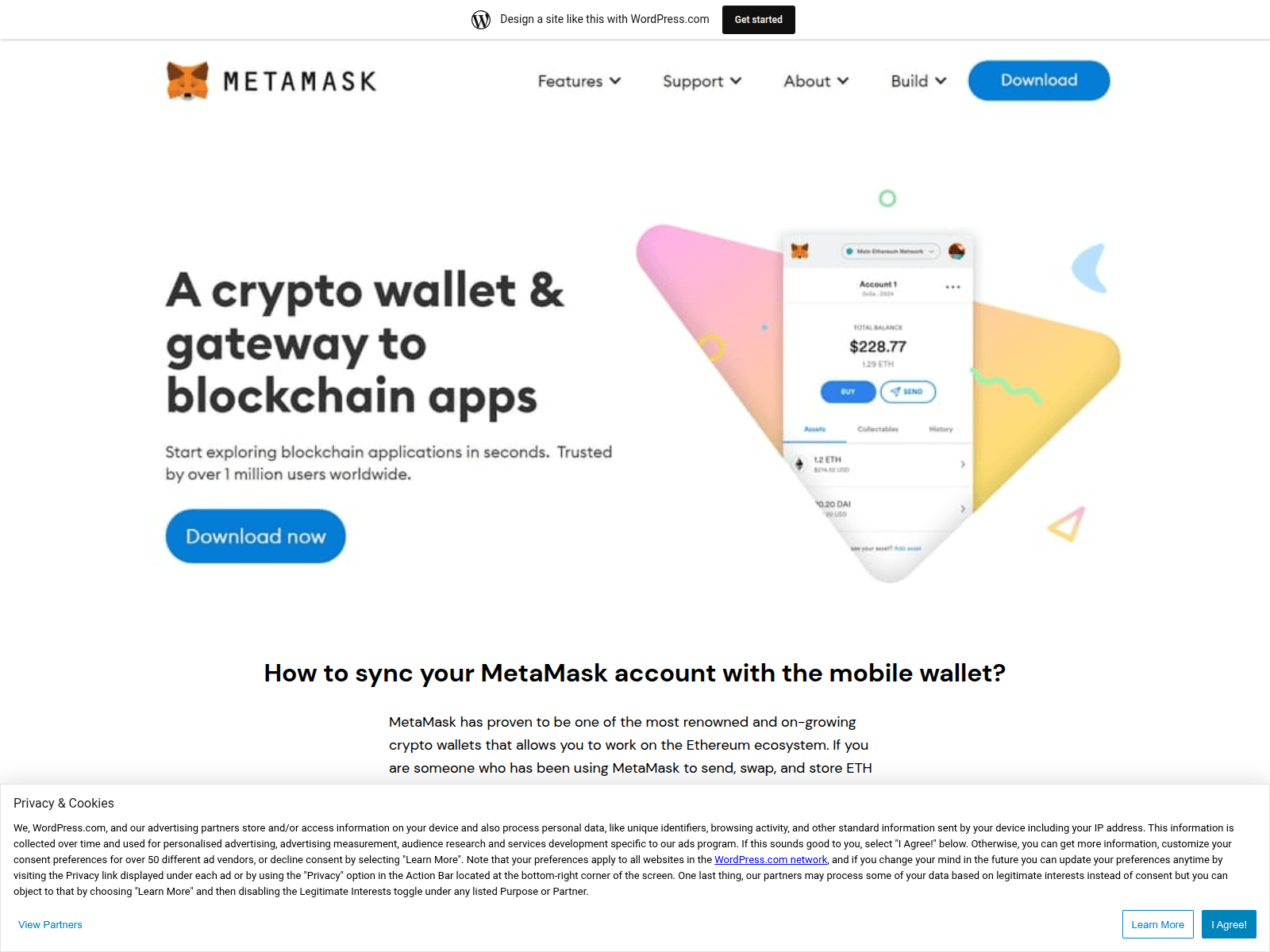
metaamaskkloggin.wordpress.com
  metamasklogimn.wordpress.com
  starttrezor.wordpress.com
  krakonl0gin.wordpress.com
  webphanto.wordpress.com
  urlwatch.com
  contact-metamask-support.blogspot.com.co
  voadafone.new.hr-rewards.com
  metamask-download.com
  help-metamaskio-docs.tem3.io
  pulsenotch.com
  www.stores-dofus.fr
  stresser.work
  quantumfxbrokers.com
IC3 del FBI
Denunciar delitos cometidos a través de Internet en los Estados Unidos
Federal tips line1-800-CALL-FBI

“MetaMask Log In | Cryptocurrency Exchange”
On 23 July 2026 the domain metmaklogin.wordpress.com was observed delivering a credential‑collection page titled “MetaMask Log In | Cryptocurrency Exchange”. The page title explicitly references MetaMask, indicating a brand‑impersonation attempt aimed at cryptocurrency users. VirusTotal scans show that 13 of 95 security vendors have flagged the domain as malicious, providing independent confirmation of its abusive nature. DNS resolution points to the IP address 192.0.78.12, which belongs to AS2635 operated by Automattic, Inc., the host of the WordPress.com service. The domain is served by WordPress, MySQL, PHP, Nginx and is protected by HSTS and HTTP/3, consistent with the typical WordPress.com stack.
The HTTP response code returned is 410 (Gone), and the site has been taken offline, as reflected by the current status. Despite removal, the domain remains listed on at least one public blocklist; PhishDestroy has recorded it as blocked. Registration data show the domain was created on 3 March 2000 and was registered through MarkMonitor, Inc., a registrar frequently used by legitimate enterprises, which may aid the attacker in gaining initial trust. The SSL certificate is issued by Let’s Encrypt (identifier E8), offering a valid TLS connection but providing no indication of legitimacy.
The site is classified as a crypto‑related scam, specifically a MetaMask impersonation, targeting users seeking to manage digital assets. Uncertainties remain regarding the exact phishing kit used and any additional infrastructure that may have supported the campaign before takedown. Defenders should continue to block the domain at network perimeter and DNS layers, monitor for any resurgence of the same subdomain pattern, and update endpoint protection rules to reflect the 13 vendor detections reported by VirusTotal.

10 fuentes externas supervisadas · instantánea del 11/08/2026
Accesible → Inaccesible
Análisis de Cloudflare Radar almacenado · Abrir análisis
Análisis de Cloudflare Radar almacenado · Abrir análisis
 (US)
(US)
For the registrable domain wordpress.com behind this subdomain, the registrar above operates under an ICANN accreditation agreement. The links below provide the official fee schedule and current DNS abuse compliance guidance.
RAA §3.18 establishes abuse-contact and handling requirements. This report can document stored outbound notices and later technical observations; it does not by itself establish receipt, investigation, remediation, or contractual non-compliance.
7 tecnologías identificadas con alta confianza
Esta IP de origen aloja múltiples dominios de phishing; la infraestructura puede compartirse entre campañas.
These domains also target MetaMask users. View all MetaMask threats →
Informes agregados recientemente de la base de datos PhishDestroy. Estos enlaces de descubrimiento no implican infraestructura ni propiedad compartida.
Si ingresó credenciales de cuenta, información personal o de pago, o descargó un archivo de este dominio, tome medidas inmediatas. A continuación encontrará recursos que le ayudarán a informar el incidente y protegerse.


Seleccione su país para obtener contactos oficiales de cibercrimen o crear un borrador de queja →.
Análisis de amenazas utilizando listas de bloqueo almacenadas, WHOIS, DNS y evidencia de escaneo público
Escanear ahoraEnvía los dominios sospechosos a nuestra base de datos de amenazas: protege a la comunidad
DenunciarInformes de phishing recientes y cambios de disponibilidad observados
MonitorizarSupervisa las amenazas en tiempo real o impugna esta entrada si crees que se trata de un falso positivo.