

 ChainPatrol
 Web-Check
  SOCRadar
  LeakIX
FBI IC3
Melden Sie internetbasierte Kriminalität in den Vereinigten Staaten
Federal tips line1-800-CALL-FBI

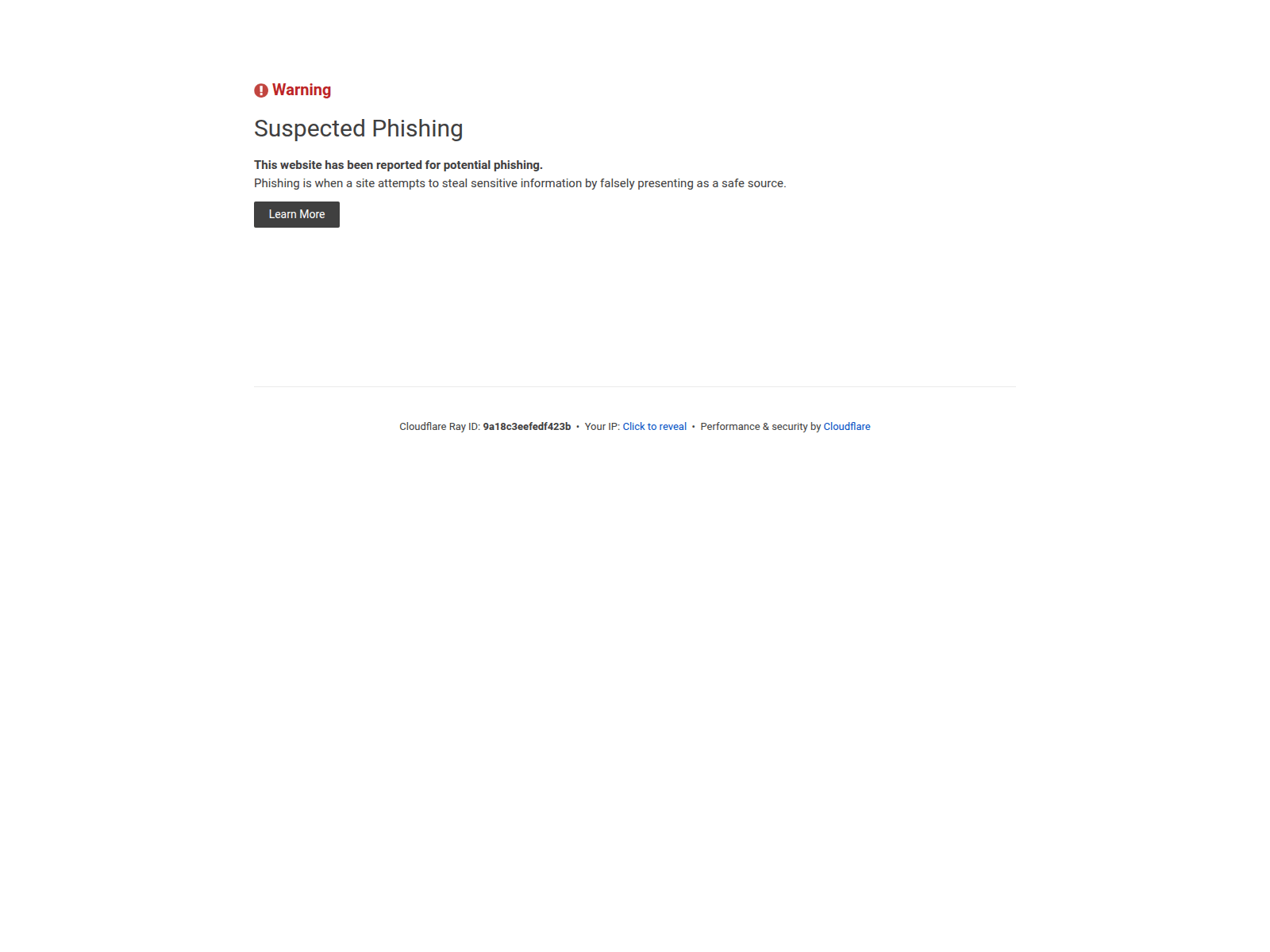
“Suspected phishing site | Cloudflare”
upholdhomelogin.pages.dev — Inhalt nicht verfügbar. Markenidentität: Genericcloudflare; Betrugstyp: Credential Phishing. Zusammenfassung der Beweislage: VirusTotal 9/93 (alphaMountain.ai, BitDefender, CyRadar, ESET, Fortinet); URLScan malicious verdict; PhishDestroy score 77/100. Registrar: Cloudflare.
Die ausführliche Analyse von PhishDestroy AI bleibt auf Englisch, damit der ursprüngliche forensische Bericht unverändert bleibt.
This domain, upholdhomelogin.pages.dev, was registered through Cloudflare on 21 February 2026 and resolves to the Cloudflare‑owned address 172.66.44.235, which is announced by AS13335 in the United States. The site presents the Cloudflare‑generated title “Suspected phishing site | Cloudflare” and serves over HTTPS using a Google Trust Services / WE1 certificate. Technical headers indicate HSTS enforcement and HTTP/3 support, while the current HTTP response is a 403 status code, suggesting the content has been taken offline. Threat intelligence flags the domain as a credential‑phishing operation; nine of ninety‑three VirusTotal scanners have raised alerts, and it appears on a single external blocklist.
Additional reputation services have assigned a Gridinsoft trust score of zero out of one hundred, and PhishDestroy has listed the host as blocked. The nameservers in use are harley.ns.cloudflare.com and bonnie.ns.cloudflare.com, both belonging to Cloudflare’s DNS infrastructure. No further detail on the phishing page’s content or targeted brands is available beyond the generic “credential phishing” label. Because the domain is hosted on a shared Cloudflare network, investigators should treat any future resolution to the same IP as potentially malicious, especially if similar TLS fingerprints reappear.
Defenders are advised to add upholdhomelogin.pages.dev to network‑level deny lists, monitor DNS queries for the associated Cloudflare nameservers, and employ URL filtering that references the observed blocklist entries. Continuous re‑scanning with VirusTotal or similar multi‑engine services is recommended to capture any changes in detection posture. Until the site is confirmed clean, the precautionary block remains the recommended mitigation.

 (US)
San Francisco, US
(US)
San Francisco, USHTTP Strict Transport Security (HSTS) informs browsers that the site should only be accessed using HTTPS.
www.rfc-editor.org 100 % KonfidenzCloudflare is a web-infrastructure and website-security company, providing content-delivery-network services, DDoS mitigation, Internet security, and distributed domain-name-server services.
www.cloudflare.com 100 % KonfidenzHTTP/3 is the third major version of the Hypertext Transfer Protocol used to exchange information on the World Wide Web.
httpwg.org 100 % KonfidenzGoogle PageSpeed Insights — mobile performance audit of upholdhomelogin.pages.dev · checked Apr 13, 2026
Wenn Sie Kontoanmeldeinformationen, persönliche oder Zahlungsinformationen eingegeben oder eine Datei von dieser Domain heruntergeladen haben, ergreifen Sie sofort Maßnahmen. Nachfolgend finden Sie Ressourcen, die Ihnen helfen, den Vorfall zu melden und sich zu schützen.


Wählen Sie Ihr Land aus, um Offizielle Kontakte im Bereich Cyberkriminalität oder einen Beschwerdeentwurf erstellen → zu erhalten.
Diese Berichte werden auf dieselbe gemeinsame Edge-IP aufgelöst. Sie helfen bei der Berichtserkennung, bedeuten jedoch keinen gemeinsamen Besitz oder einen gemeinsamen Ursprungsserver.
These domains also target Genericcloudflare users. View all Genericcloudflare threats →
Kürzlich hinzugefügte Berichte aus der PhishDestroy-Datenbank. Diese Discovery-Links implizieren keine gemeinsame Nutzung der Infrastruktur oder des Eigentums.
Bedrohungsanalyse anhand gespeicherter Blocklisten, WHOIS, DNS und öffentlicher Scan-Beweise
Jetzt scannenMelden Sie verdächtige Domains an unsere Bedrohungsdatenbank – schützen Sie die Community
MeldenAktuelle Phishing-Meldungen und beobachtete Verfügbarkeitsänderungen
ÜberwachenBeobachten Sie aktuelle Bedrohungen oder legen Sie Widerspruch gegen diesen Eintrag ein, wenn Sie der Meinung sind, dass es sich um einen Fehlalarm handelt
 tk.ercajchain.com
  gtlk.link
  metamask-k.blogspot.co.ke