allocation-typemedia.net
  injective-claim.top
  treyspin.com
  pumplive.solstream.cc
FBI IC3
Melden Sie internetbasierte Kriminalität in den Vereinigten Staaten
Federal tips line1-800-CALL-FBI

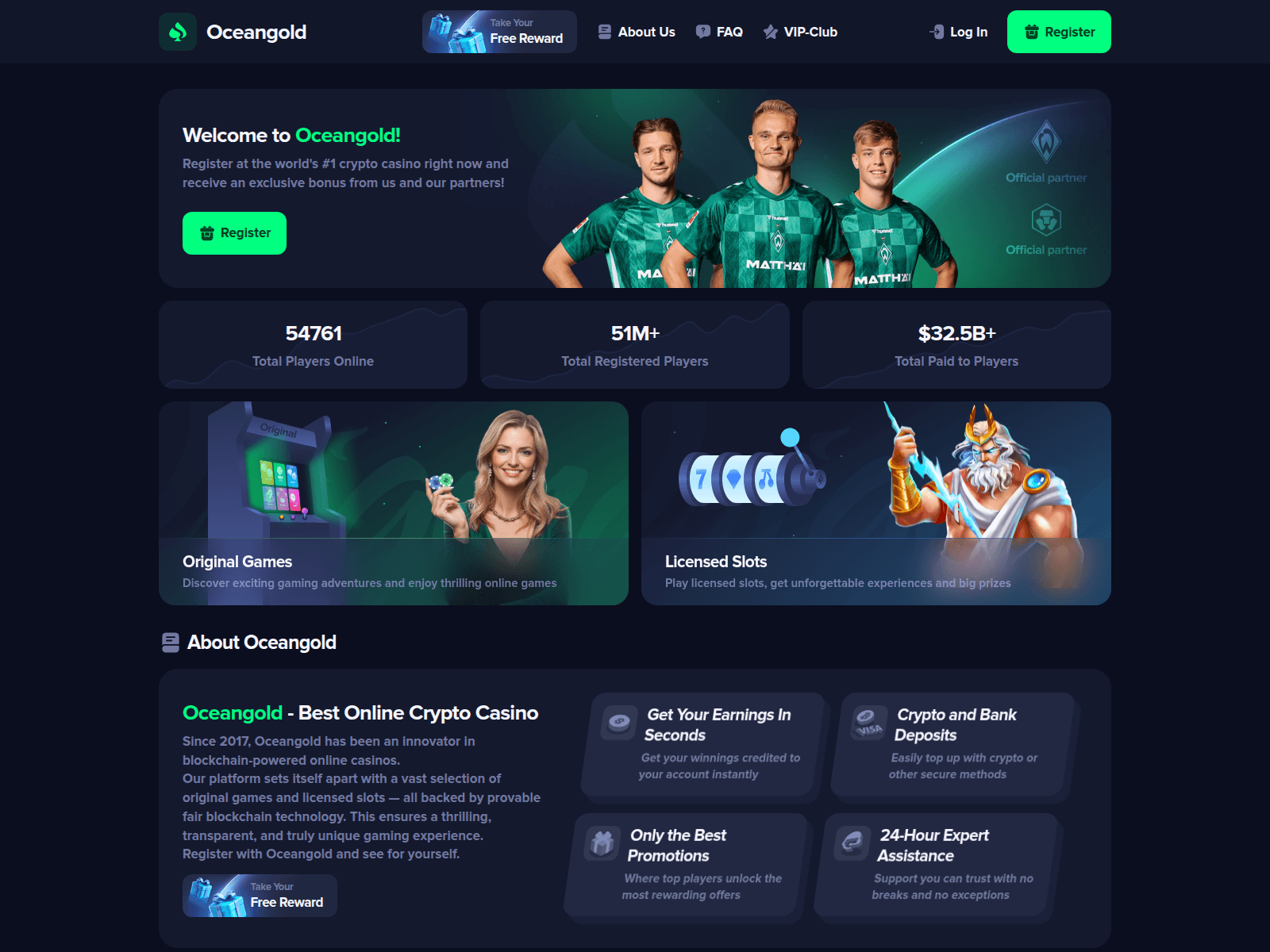
“Oceangold: Most Popular Online Crypto Casino Based on Blockchain”
Analysis of oceangold.eu as of 23 July 2026 indicates that the site is currently offline but retains a hostile infrastructure profile. The domain resolves to the IP address 172.67.130.156, which belongs to the Cloudflare network (AS13335) and is geolocated in the United States. DNS records point to meg.ns.cloudflare.com and razvan.ns.cloudflare.com, confirming Cloudflare as the authoritative nameserver. Registration details show the domain was created through PDR Ltd. d/b/a PublicDomainRegistry.com, a public‑domain registrar often used by malicious operators. The TLS certificate was issued by Google Trust Services under the WE1 intermediate, a legitimate chain that does not mitigate the underlying abuse.
The page title retrieved from historic snapshots reads “Oceangold: Most Popular Online Crypto Casino Based on Blockchain,” matching the declared scam type of a crypto‑focused gambling fraud. Malware and phishing analysis tools have identified the site as employing the “Gambler Scam” kit, a known template for crypto‑themed credential harvesting. Reputation scoring from Gridinsoft assigns a trust score of 1 out of 100, reflecting extreme maliciousness. VirusTotal reports 15 of 95 scanned vendors flagging the domain, reinforcing the malicious classification.
The domain is listed on one external blocklist and is actively blocked by the PhishDestroy mitigation service. Uncertainty remains regarding the exact content served at the time of takedown, as the site is offline and no live HTTP response can be captured. Defenders should continue to block traffic to 172.67.130.156 and to oceangold.eu at both network and DNS layers, monitor for any re‑registration attempts, and consider adding the domain to internal watchlists. Ongoing observation of Cloudflare‑hosted IP ranges for similar phishing kits is advised, as the infrastructure may be reused for future campaigns.
PD-1772503091-oceangold.eu
 Gridinsoft Analysis
| Detection System | Indicator | Verdict | Alert |
|---|---|---|---|
| OpenDNS | oceangold.eu |
phishing | Phishing Block |
| Hagezi Threat Feed | oceangold.eu |
malicious | Sinkholed |
| DNS4EU | oceangold.eu |
malicious | Sinkholed |
10 überwachte externe Feeds · gespeicherter Stand 12.08.2026
Erreichbar → Nicht erreichbar
Cloudflare-Radar-Scan gespeichert · Scan öffnen
 (IN)
(IN)
 San Francisco, US
Diese Berichte werden auf dieselbe gemeinsame Edge-IP aufgelöst. Sie helfen bei der Berichtserkennung, bedeuten jedoch keinen gemeinsamen Besitz oder einen gemeinsamen Ursprungsserver.
Part of the Betrug bei Glücksspielen phishing campaign. View all campaign domains →
Kürzlich hinzugefügte Berichte aus der PhishDestroy-Datenbank. Diese Discovery-Links implizieren keine gemeinsame Nutzung der Infrastruktur oder des Eigentums.
Wenn Sie Kontoanmeldeinformationen, persönliche oder Zahlungsinformationen eingegeben oder eine Datei von dieser Domain heruntergeladen haben, ergreifen Sie sofort Maßnahmen. Nachfolgend finden Sie Ressourcen, die Ihnen helfen, den Vorfall zu melden und sich zu schützen.


Wählen Sie Ihr Land aus, um Offizielle Kontakte im Bereich Cyberkriminalität oder einen Beschwerdeentwurf erstellen → zu erhalten.
Bedrohungsanalyse anhand gespeicherter Blocklisten, WHOIS, DNS und öffentlicher Scan-Beweise
Jetzt scannenMelden Sie verdächtige Domains an unsere Bedrohungsdatenbank – schützen Sie die Community
MeldenAktuelle Phishing-Meldungen und beobachtete Verfügbarkeitsänderungen
ÜberwachenBeobachten Sie aktuelle Bedrohungen oder legen Sie Widerspruch gegen diesen Eintrag ein, wenn Sie der Meinung sind, dass es sich um einen Fehlalarm handelt