

 ChainPatrol
 Web-Check
  SOCRadar
  LeakIX
FBI IC3
Melden Sie internetbasierte Kriminalität in den Vereinigten Staaten
Federal tips line1-800-CALL-FBI

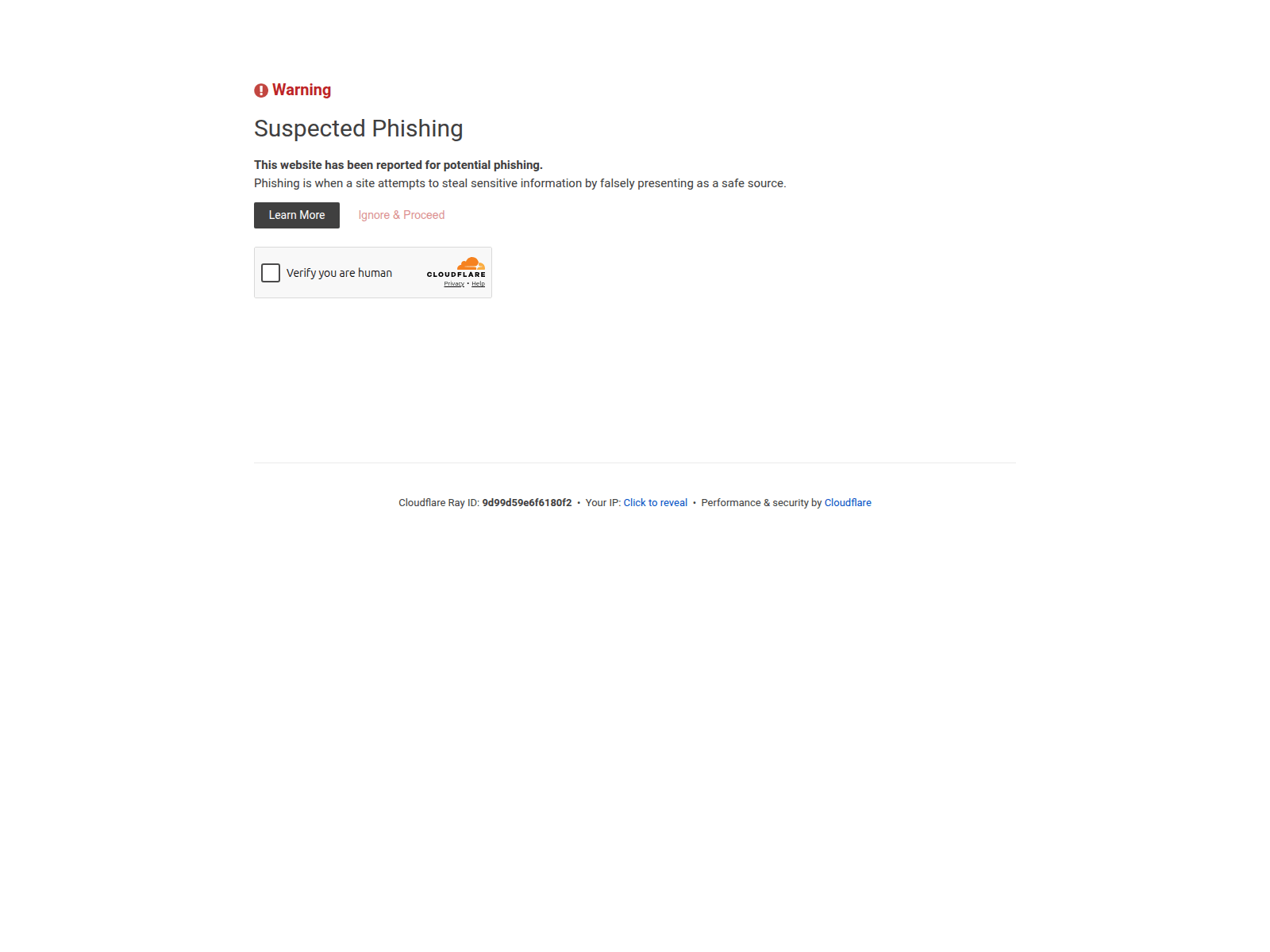
“Suspected phishing site | Cloudflare”
neovaloneraai.de — Nicht bestätigt. Markenidentität: Genericcloudflare; Betrugstyp: Generic Phishing. Zusammenfassung der Beweislage: VirusTotal 14/91 (alphaMountain.ai, BitDefender, Chong Lua Dao, CyRadar, Forcepoint ThreatSeeker); URLScan malicious verdict; Google Safe Browsing flagged; 2 external blocklist matches (MetaMask, SEAL); PhishDestroy score 100/100.
Die ausführliche Analyse von PhishDestroy AI bleibt auf Englisch, damit der ursprüngliche forensische Bericht unverändert bleibt.
Analysis of neovaloneraai.de shows a domain created on March 09, 2026 that has been actively used for phishing and is now taken offline. The domain is delegated to the Cloudflare name servers bob.ns.cloudflare.com and vera.ns.cloudflare.com and resolves to IP address 188.114.96.3, which belongs to AS13335 Cloudflare, Inc. in the United States. The hosting infrastructure presents modern security features, including HTTP Strict Transport Security (HSTS) and HTTP/3, indicating that the site leveraged Cloudflare’s edge services. TLS termination is performed by a certificate issued by Google Trust Services under the WE1 identifier, confirming a valid, publicly trusted SSL chain.
The public page title returned by the site, "Suspected phishing site | Cloudflare," is the default block page displayed by Cloudflare when a domain is flagged for malicious activity. Independent security services have corroborated the malicious classification: Google Safe Browsing lists the domain for social engineering, and VirusTotal reports that 14 of 94 scanning engines flagged the domain. The domain appears on three security blocklists and is explicitly blocked by PhishDestroy, MetaMask, and SEAL. These multiple detections suggest a coordinated effort to distribute phishing content, although the exact content and targeted brand remain unknown because the site is no longer reachable.
Defenders should treat neovaloneraai.de as a high‑risk phishing source. Immediate actions include adding the domain to DNS‑level and proxy blocklists, updating intrusion detection signatures to watch for connections to 188.114.96.3, and monitoring for any re‑registration or DNS changes that could resurrect the site. Continuous observation of Cloudflare‑hosted IP ranges for similar patterns is advisable, as the infrastructure can be reused for future campaigns. Until the domain is confirmed safe, network and endpoint controls should deny any traffic to neovaloneraai.de and its associated IP address.

 San Francisco, US
HTTP Strict Transport Security — forces browsers to use HTTPS connections only.
Web infrastructure and security company providing CDN, DDoS mitigation, and DNS services.
www.cloudflare.comThird major version of HTTP protocol, built on QUIC for faster, more reliable connections.
Google PageSpeed Insights — mobile performance audit of neovaloneraai.de · checked Mar 9, 2026
Wenn Sie Kontoanmeldeinformationen, persönliche oder Zahlungsinformationen eingegeben oder eine Datei von dieser Domain heruntergeladen haben, ergreifen Sie sofort Maßnahmen. Nachfolgend finden Sie Ressourcen, die Ihnen helfen, den Vorfall zu melden und sich zu schützen.


Wählen Sie Ihr Land aus, um Offizielle Kontakte im Bereich Cyberkriminalität oder einen Beschwerdeentwurf erstellen → zu erhalten.
Diese Berichte werden auf dieselbe gemeinsame Edge-IP aufgelöst. Sie helfen bei der Berichtserkennung, bedeuten jedoch keinen gemeinsamen Besitz oder einen gemeinsamen Ursprungsserver.
These domains also target Genericcloudflare users. View all Genericcloudflare threats →
Kürzlich hinzugefügte Berichte aus der PhishDestroy-Datenbank. Diese Discovery-Links implizieren keine gemeinsame Nutzung der Infrastruktur oder des Eigentums.
Bedrohungsanalyse anhand gespeicherter Blocklisten, WHOIS, DNS und öffentlicher Scan-Beweise
Jetzt scannenMelden Sie verdächtige Domains an unsere Bedrohungsdatenbank – schützen Sie die Community
MeldenAktuelle Phishing-Meldungen und beobachtete Verfügbarkeitsänderungen
ÜberwachenBeobachten Sie aktuelle Bedrohungen oder legen Sie Widerspruch gegen diesen Eintrag ein, wenn Sie der Meinung sind, dass es sich um einen Fehlalarm handelt
 payme-paypal.com
  spinforgechain.com
  trezor.gitbook.io
  lettersboxdanswers.com