 ChainPatrol
 Web-Check
  SOCRadar
  LeakIX
FBI IC3
Melden Sie internetbasierte Kriminalität in den Vereinigten Staaten
Federal tips line1-800-CALL-FBI

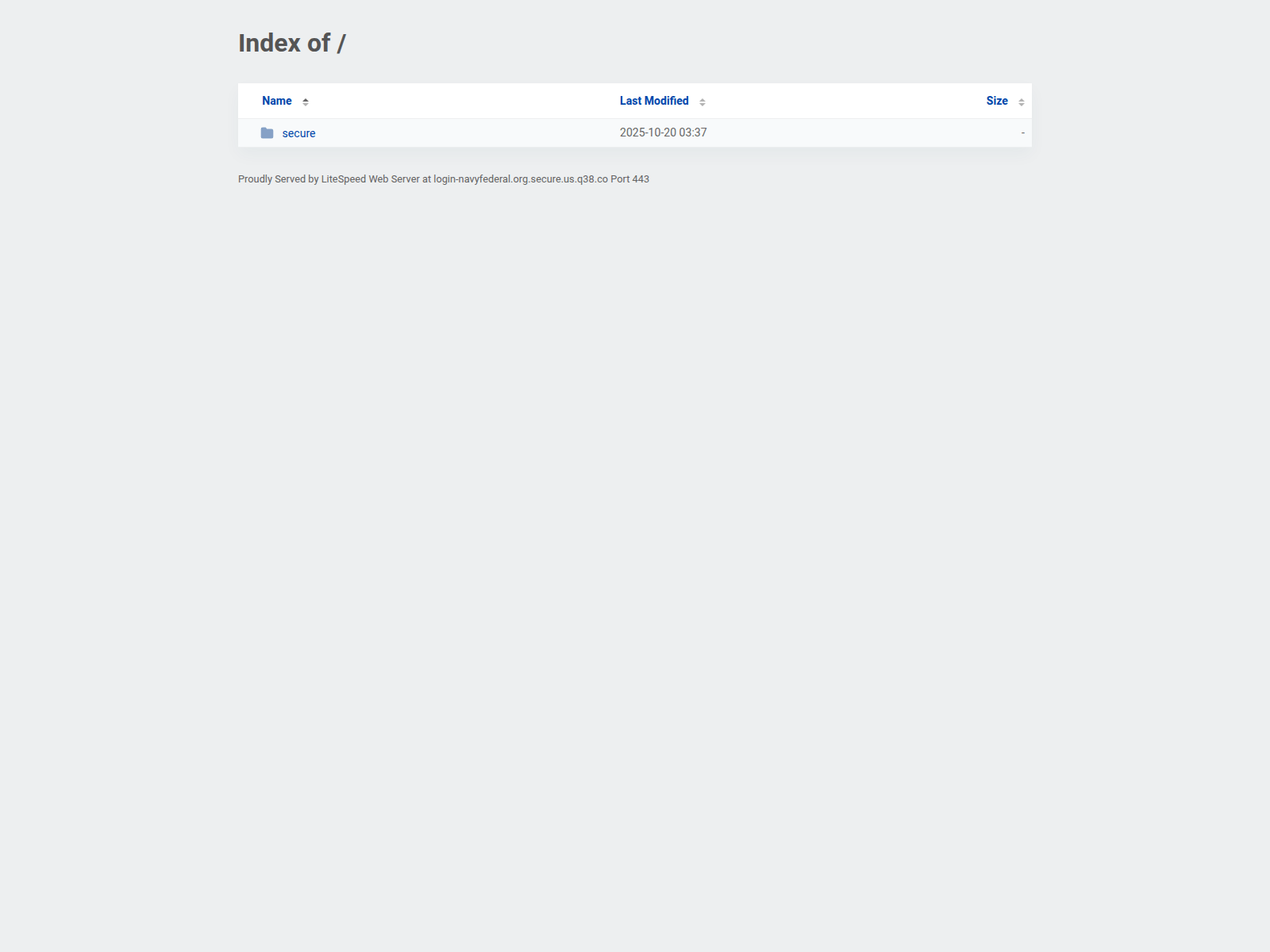
“Index of /”
login-navyfederal.org.secure.us.q38.co — Inhalt nicht verfügbar (HTTP 502). Betrugstyp: Credential Phishing. Zusammenfassung der Beweislage: VirusTotal 14/95 (ADMINUSLabs, Criminal IP, alphaMountain.ai, BitDefender, CyRadar); PhishDestroy score 92/100. Registrar: NameCheap.
Die ausführliche Analyse von PhishDestroy AI bleibt auf Englisch, damit der ursprüngliche forensische Bericht unverändert bleibt.
This domain, login-navyfederal.org.secure.us.q38.co, is actively engaged in credential phishing targeting users of Navy Federal Credit Union. The infrastructure presents a fraudulent login interface designed to harvest account credentials, including usernames, passwords, and potentially multi-factor authentication codes. Analysis of the domain structure and subdomain path suggests an attempt to mimic legitimate authentication portals, increasing the likelihood of successful deception among unsuspecting users. Infrastructure analysis reveals multiple technical indicators supporting its malicious classification. The domain was registered on September 16, 2025, through NameCheap, Inc., and currently resolves to the IP address 192.142.54.88, hosted in the Netherlands under AS214036 (Ultahost, Inc.). No SSL certificate is present, exposing transmitted data to interception. Security vendors have flagged the domain on VirusTotal, with 14 out of 95 engines detecting malicious activity. Additionally, the domain appears on two security blocklists and is explicitly blocked by PhishDestroy and PhishingDB. The page title, 'Index of /', further indicates misconfigured or intentionally obfuscated server content. Users who visited login-navyfederal.org.secure.us.q38.co should immediately assume their credentials were compromised. Affected individuals must change their Navy Federal account passwords and enable multi-factor authentication if not already active. Monitor the account for unauthorized transactions or configuration changes, such as altered contact details or linked external accounts. Financial institutions should be notified of potential fraud attempts, and users are advised to review connected devices for suspicious activity. If personal or financial data was entered, consider placing a fraud alert with credit bureaus to mitigate identity theft risks.

 (US)
(US)

Wenn Sie Kontoanmeldeinformationen, persönliche oder Zahlungsinformationen eingegeben oder eine Datei von dieser Domain heruntergeladen haben, ergreifen Sie sofort Maßnahmen. Nachfolgend finden Sie Ressourcen, die Ihnen helfen, den Vorfall zu melden und sich zu schützen.

Wählen Sie Ihr Land aus, um Offizielle Kontakte im Bereich Cyberkriminalität oder einen Beschwerdeentwurf erstellen → zu erhalten.
Diese Ursprungs-IP hostet mehrere Phishing-Domänen – die Infrastruktur kann kampagnenübergreifend gemeinsam genutzt werden.
Kürzlich hinzugefügte Berichte aus der PhishDestroy-Datenbank. Diese Discovery-Links implizieren keine gemeinsame Nutzung der Infrastruktur oder des Eigentums.
Bedrohungsanalyse anhand gespeicherter Blocklisten, WHOIS, DNS und öffentlicher Scan-Beweise
Jetzt scannenMelden Sie verdächtige Domains an unsere Bedrohungsdatenbank – schützen Sie die Community
MeldenAktuelle Phishing-Meldungen und beobachtete Verfügbarkeitsänderungen
ÜberwachenBeobachten Sie aktuelle Bedrohungen oder legen Sie Widerspruch gegen diesen Eintrag ein, wenn Sie der Meinung sind, dass es sich um einen Fehlalarm handelt
 globalscourierlogistics.com
  pokymax.com
  iquantumflux.com
  vestorsolution.org