

 ChainPatrol
 Web-Check
  SOCRadar
  LeakIX
FBI IC3
Melden Sie internetbasierte Kriminalität in den Vereinigten Staaten
Federal tips line1-800-CALL-FBI

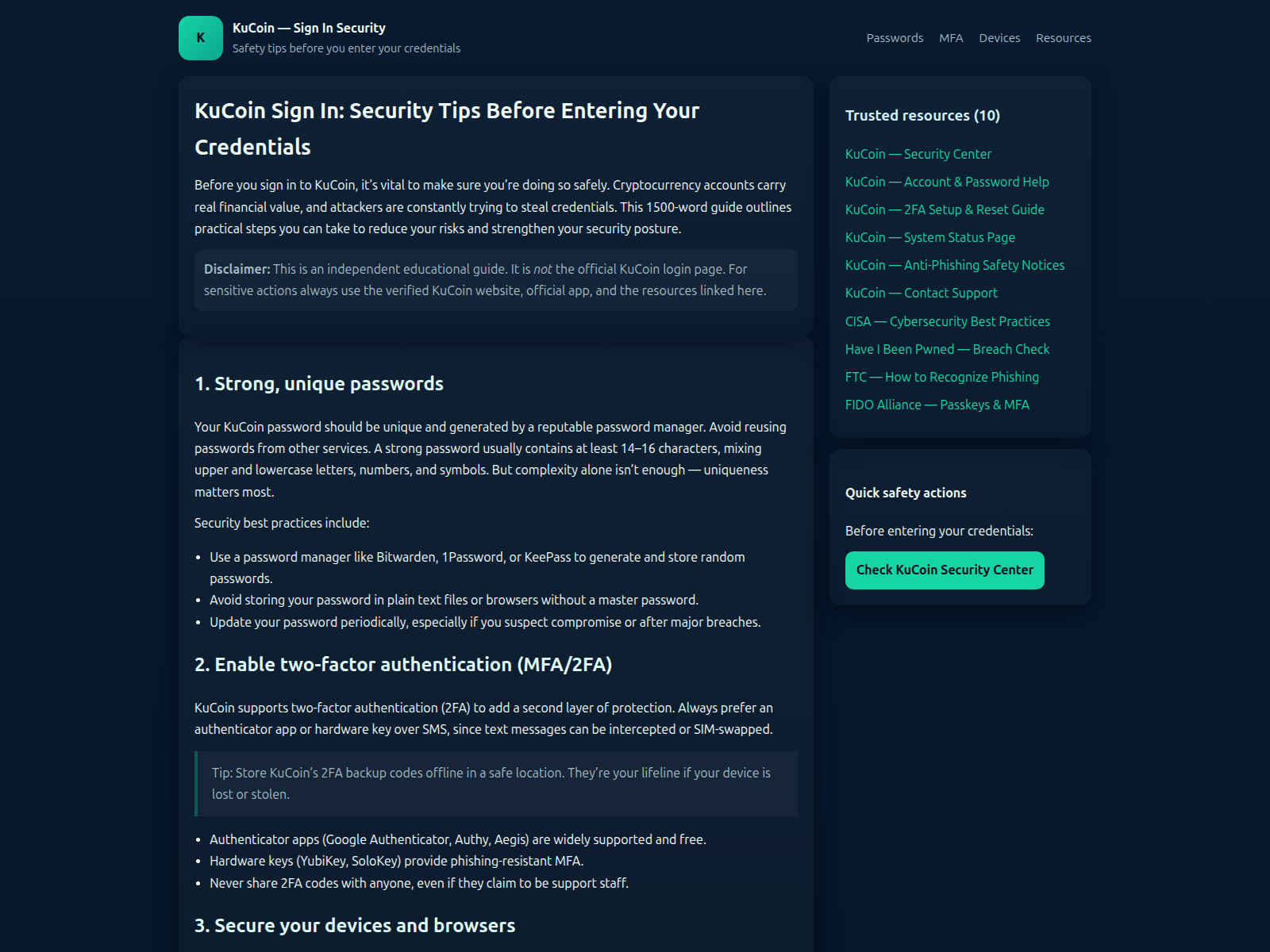
“KuCoin Sign In: Security Tips Before Entering Your Credentials”
ku-coin-login-aht.pages.dev — Nicht bestätigt. Markenidentität: KuCoin; Betrugstyp: Crypto Scam. Zusammenfassung der Beweislage: VirusTotal 14/91 (ADMINUSLabs, alphaMountain.ai, BitDefender, ESET, Emsisoft); URLScan malicious verdict; Google Safe Browsing flagged; CF Radar malicious; PhishDestroy score 100/100. Registrar: Cloudflare.
Die ausführliche Analyse von PhishDestroy AI bleibt auf Englisch, damit der ursprüngliche forensische Bericht unverändert bleibt.
This domain is an active brand impersonation threat designed to deceive users into entering their login credentials for KuCoin, a major cryptocurrency exchange. The site mimics the official KuCoin sign-in page, complete with a fraudulent security tips section, to trick victims into disclosing sensitive account information. Such attacks often lead to unauthorized access, financial theft, or further exploitation through malware distribution. Users who interact with this domain risk immediate account compromise and potential loss of digital assets stored on the platform.
Analysis indicates this is a sophisticated impersonation attempt with multiple technical red flags. The domain was registered on September 18, 2025, through Cloudflare, Inc., and is currently flagged by 17 out of 95 security vendors on VirusTotal. It appears on one security blocklist and is explicitly blocked by PhishDestroy. The SSL certificate, issued by Google Trust Services, resolves to a Cloudflare IP address (172.66.44.147) located in Canada. The page title, 'KuCoin Sign In: Security Tips Before Entering Your Credentials,' is crafted to appear legitimate while exploiting user trust in security advisories.
If you visited ku-coin-login-aht.pages.dev and entered any credentials, take immediate action to secure your account. First, disconnect any active sessions on the official KuCoin platform and revoke access to all connected devices or applications. Change your password using a strong, unique combination and enable multi-factor authentication if not already active. Monitor your account for unauthorized transactions and report any suspicious activity to KuCoin support. Consider scanning your device for malware, as phishing sites may deploy additional payloads. Avoid interacting with any communications from this domain, including emails or messages, and verify all future login attempts through the official KuCoin website or application.

 (US)
(US)
 Toronto, CA
HTTP Strict Transport Security — forces browsers to use HTTPS connections only.
Web infrastructure and security company providing CDN, DDoS mitigation, and DNS services.
www.cloudflare.comThird major version of HTTP protocol, built on QUIC for faster, more reliable connections.
Google PageSpeed Insights — mobile performance audit of ku-coin-login-aht.pages.dev · checked Mar 22, 2026
Wenn Sie Kontoanmeldeinformationen, persönliche oder Zahlungsinformationen eingegeben oder eine Datei von dieser Domain heruntergeladen haben, ergreifen Sie sofort Maßnahmen. Nachfolgend finden Sie Ressourcen, die Ihnen helfen, den Vorfall zu melden und sich zu schützen.


Wählen Sie Ihr Land aus, um Offizielle Kontakte im Bereich Cyberkriminalität oder einen Beschwerdeentwurf erstellen → zu erhalten.
Diese Berichte werden auf dieselbe gemeinsame Edge-IP aufgelöst. Sie helfen bei der Berichtserkennung, bedeuten jedoch keinen gemeinsamen Besitz oder einen gemeinsamen Ursprungsserver.
These domains also target KuCoin users. View all KuCoin threats →
Kürzlich hinzugefügte Berichte aus der PhishDestroy-Datenbank. Diese Discovery-Links implizieren keine gemeinsame Nutzung der Infrastruktur oder des Eigentums.
Bedrohungsanalyse anhand gespeicherter Blocklisten, WHOIS, DNS und öffentlicher Scan-Beweise
Jetzt scannenMelden Sie verdächtige Domains an unsere Bedrohungsdatenbank – schützen Sie die Community
MeldenAktuelle Phishing-Meldungen und beobachtete Verfügbarkeitsänderungen
ÜberwachenBeobachten Sie aktuelle Bedrohungen oder legen Sie Widerspruch gegen diesen Eintrag ein, wenn Sie der Meinung sind, dass es sich um einen Fehlalarm handelt
 msprq72kfly-ycgfnpdr-0e5a1b-vn555c124.pages.dev
  tzr-3erfv.iris42.workers.dev
  reconcreditcapital.com
  megatradespro.com
  hii-alight.com
  disney2-0.vercel.app
  pg-alightworklife.com