
 ChainPatrol
 Web-Check
  SOCRadar
  LeakIX
FBI IC3
Melden Sie internetbasierte Kriminalität in den Vereinigten Staaten
Federal tips line1-800-CALL-FBI

“Kraken Login”
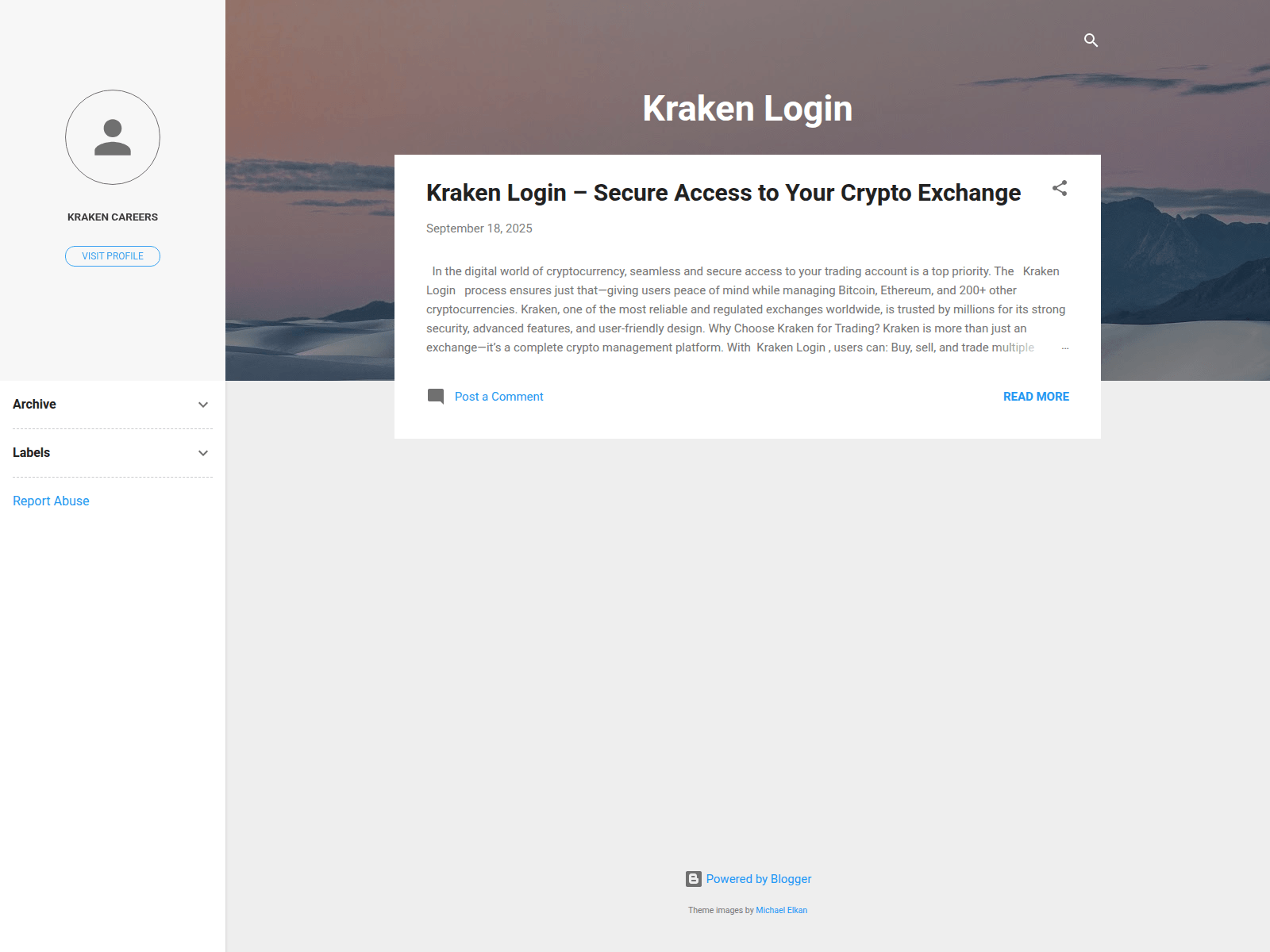
kraken-login-en-us.blogspot.com — Inhalt nicht verfügbar. Markenidentität: Kraken; Betrugstyp: Crypto Scam. Zusammenfassung der Beweislage: VirusTotal 16/95 (ADMINUSLabs, ChainPatrol, alphaMountain.ai, BitDefender, CyRadar); Google Safe Browsing flagged; PhishDestroy score 95/100. Registrar: GOOGLE (ASN: 15169).
Die ausführliche Analyse von PhishDestroy AI bleibt auf Englisch, damit der ursprüngliche forensische Bericht unverändert bleibt.
The domain kraken-login-en-us.blogspot.com was observed hosting a page titled “Kraken Login”. The page title and the explicit indication that the site impersonates Kraken identify the campaign as a brand‑impersonation crypto‑scam. The site was registered through Google’s registrar and is associated with ASN 15169, the Google network, which resolves to IP 192.178.155.132 located in the United States. The SSL certificate presented is issued by Google Trust Services under the “WE2” profile, which is typical for Blogger‑hosted content and does not provide any cryptographic assurance of legitimacy beyond the platform’s standard TLS. Technical fingerprints show the use of Blogger as the hosting platform together with Java, Python, OpenGSE libraries and support for HTTP/3, consistent with a generic web‑app stack rather than a specialized phishing kit.
Google Safe Browsing flagged the URL for social‑engineering, and the domain appears on at least one public blocklist. PhishDestroy has also listed the domain as blocked. VirusTotal scans returned 16 detections out of 95 security vendors, indicating that a significant minority of scanners recognize malicious behavior. The HTTP response returned a 404 status, and the nameserver query returned “NS_NOT_FOUND”, suggesting that the domain may have been removed from active DNS resolution at the time of analysis. The current status is recorded as offline.
Evidence points to a coordinated attempt to lure victims into entering Kraken credentials or cryptocurrency details, yet the exact landing page content has not been captured, leaving the precise credential‑capture mechanism uncertain. Defenders should continue to block the domain at network perimeter and endpoint layers, monitor for any residual DNS queries, and add the associated IP address to reputation lists.

 (US)
(US)
Blogger is a blog-publishing service that allows multi-user blogs with time-stamped entries.
www.blogger.com 100 % KonfidenzJava is a class-based, object-oriented programming language that is designed to have as few implementation dependencies as possible.
java.com 100 % KonfidenzOpenGSE is a test suite used for testing servlet compliance. It is deployed by using WAR files that are deployed on the server engine.
code.google.com 100 % KonfidenzHTTP/3 is the third major version of the Hypertext Transfer Protocol used to exchange information on the World Wide Web.
httpwg.org 100 % KonfidenzWenn Sie Kontoanmeldeinformationen, persönliche oder Zahlungsinformationen eingegeben oder eine Datei von dieser Domain heruntergeladen haben, ergreifen Sie sofort Maßnahmen. Nachfolgend finden Sie Ressourcen, die Ihnen helfen, den Vorfall zu melden und sich zu schützen.


Wählen Sie Ihr Land aus, um Offizielle Kontakte im Bereich Cyberkriminalität oder einen Beschwerdeentwurf erstellen → zu erhalten.
Diese Ursprungs-IP hostet mehrere Phishing-Domänen – die Infrastruktur kann kampagnenübergreifend gemeinsam genutzt werden.
These domains also target Kraken users. View all Kraken threats →
Kürzlich hinzugefügte Berichte aus der PhishDestroy-Datenbank. Diese Discovery-Links implizieren keine gemeinsame Nutzung der Infrastruktur oder des Eigentums.
Bedrohungsanalyse anhand gespeicherter Blocklisten, WHOIS, DNS und öffentlicher Scan-Beweise
Jetzt scannenMelden Sie verdächtige Domains an unsere Bedrohungsdatenbank – schützen Sie die Community
MeldenAktuelle Phishing-Meldungen und beobachtete Verfügbarkeitsänderungen
ÜberwachenBeobachten Sie aktuelle Bedrohungen oder legen Sie Widerspruch gegen diesen Eintrag ein, wenn Sie der Meinung sind, dass es sich um einen Fehlalarm handelt
 login-insta-page.blogspot.com
  infoshopee575.blogspot.com
  info-resmi365.blogspot.com
  princesleonorvipwebsitesreal.blogspot.com
  rbx025k.blogspot.hk
  en-us-uphold-login.blogspot.com.ng
  start-dydx-exnge-en.blogspot.com
  rbx025k.blogspot.com.es
  rbx025k.blogspot.dk
  vdbjpmeaqqjzpwxfflbjfmeykyxvcfgmhjbad.blogspot.com
  rbx025k.blogspot.ru
  nhhkl.blogspot.al