hkexco.com
  loaf24.com
  diwebaifi.com
  vvrl.cc
  trezorsuite.at
  www.stores-dofus.fr
  stresser.work
  quantumfxbrokers.com
FBI IC3
Melden Sie internetbasierte Kriminalität in den Vereinigten Staaten
Federal tips line1-800-CALL-FBI

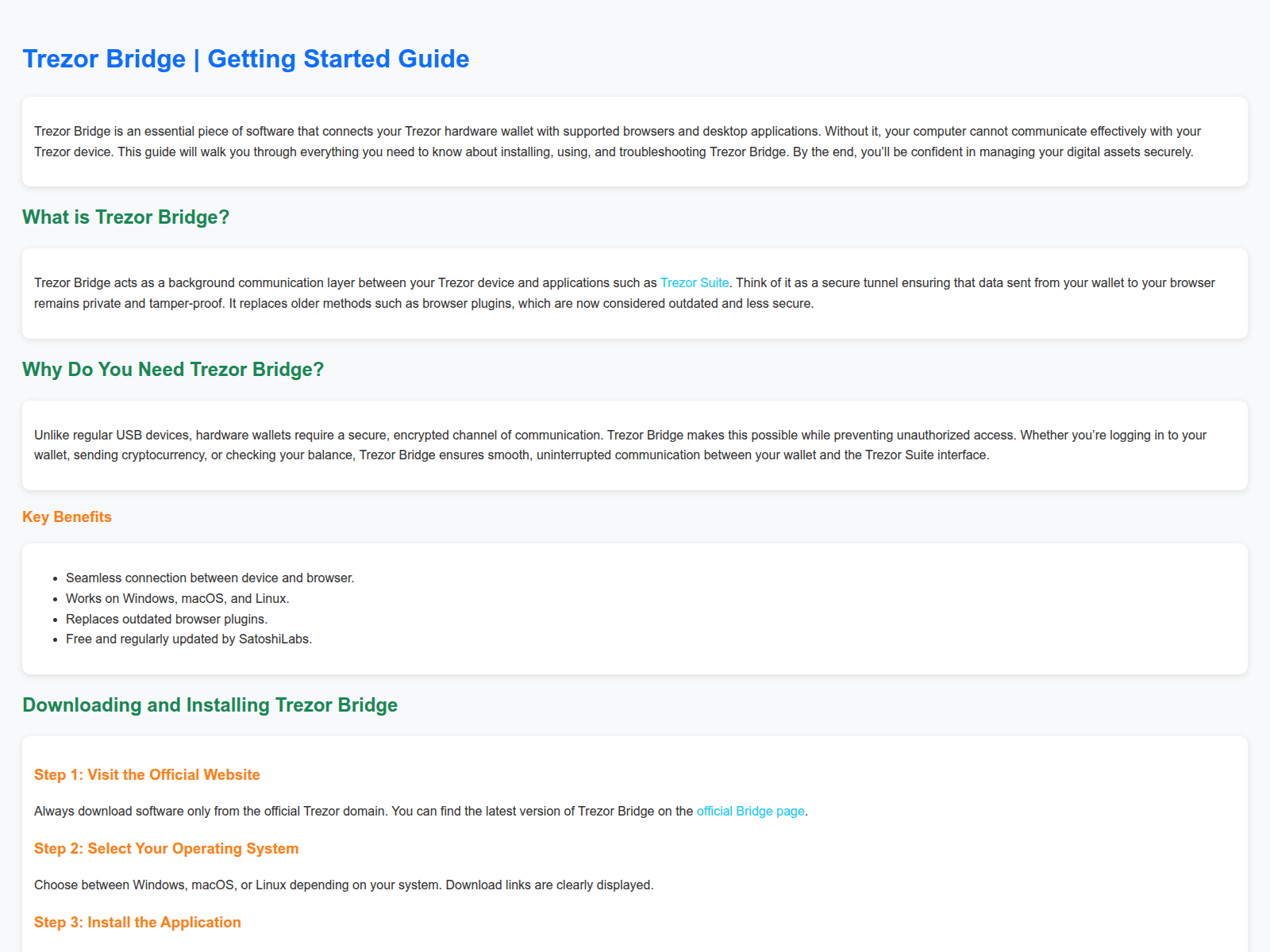
“Trezor Bridge | Getting Started Guide”
Gespeicherte Beobachtung
Analysis of h-elps--bridge.pages.dev indicates that the domain was created on March 22, 2026 and is currently taken offline. The site returned an HTTP 403 status when accessed, suggesting that the content is no longer publicly reachable. Registration data shows the domain was provisioned through Cloudflare, Inc., and the authoritative nameservers are margot.ns.cloudflare.com and mustafa.ns.cloudflare.com. DNS resolution points to the IP address 172.66.45.32, which is owned by Cloudflare and geolocated to Canada.
The TLS certificate presented is issued by Google Trust Services under the WE1 root, and the server advertises HSTS, Cloudflare protection, and HTTP/3 support. The observed page title, "Trezor Bridge | Getting Started Guide," aligns with the brand target Trezor, confirming that the domain was designed to impersonate the official Trezor Bridge onboarding experience. VirusTotal scans flagged the domain by ten of ninety-four security vendors, and the domain appears on one external security blocklist. Gridinsoft assigned a trust score of 0 out of 100, and PhishDestroy has recorded the site as blocked.
The combination of brand impersonation, a recent creation date, a Cloudflare‑hosted IP, and multiple vendor detections strongly suggests a crypto‑related phishing or scam campaign aimed at Trezor users. Uncertainty remains around the exact payload or credential‑stealing mechanism because the site is no longer reachable for content analysis. Defenders should continue to block the domain at network perimeter and DNS layers, monitor for any resurgence of the host under the same IP or similar Cloudflare‑registered subdomains, and update endpoint security signatures to include the observed VirusTotal detections. Organizations that support Trezor hardware wallets should alert users to the offline domain and reinforce safe‑browsing practices, emphasizing verification of official URLs and caution against unsolicited bridge links.

10 überwachte externe Feeds · gespeicherter Stand 11.08.2026
 (US)
(US)
 Toronto, CA
Google PageSpeed Insights — mobile performance audit of h-elps--bridge.pages.dev · checked Mar 21, 2026
Diese Berichte werden auf dieselbe gemeinsame Edge-IP aufgelöst. Sie helfen bei der Berichtserkennung, bedeuten jedoch keinen gemeinsamen Besitz oder einen gemeinsamen Ursprungsserver.
These domains also target Trezor users. View all Trezor threats →
Kürzlich hinzugefügte Berichte aus der PhishDestroy-Datenbank. Diese Discovery-Links implizieren keine gemeinsame Nutzung der Infrastruktur oder des Eigentums.
Wenn Sie Kontoanmeldeinformationen, persönliche oder Zahlungsinformationen eingegeben oder eine Datei von dieser Domain heruntergeladen haben, ergreifen Sie sofort Maßnahmen. Nachfolgend finden Sie Ressourcen, die Ihnen helfen, den Vorfall zu melden und sich zu schützen.


Wählen Sie Ihr Land aus, um Offizielle Kontakte im Bereich Cyberkriminalität oder einen Beschwerdeentwurf erstellen → zu erhalten.
Bedrohungsanalyse anhand gespeicherter Blocklisten, WHOIS, DNS und öffentlicher Scan-Beweise
Jetzt scannenMelden Sie verdächtige Domains an unsere Bedrohungsdatenbank – schützen Sie die Community
MeldenAktuelle Phishing-Meldungen und beobachtete Verfügbarkeitsänderungen
ÜberwachenBeobachten Sie aktuelle Bedrohungen oder legen Sie Widerspruch gegen diesen Eintrag ein, wenn Sie der Meinung sind, dass es sich um einen Fehlalarm handelt