fedaccessgroupsinc.com
  easytrdmarkets.online
  woodforestdefbk.live
  dfximpact.live
  ethguanfangweiyilianjie.com
  trust-aml.org
FBI IC3
Melden Sie internetbasierte Kriminalität in den Vereinigten Staaten
Federal tips line1-800-CALL-FBI

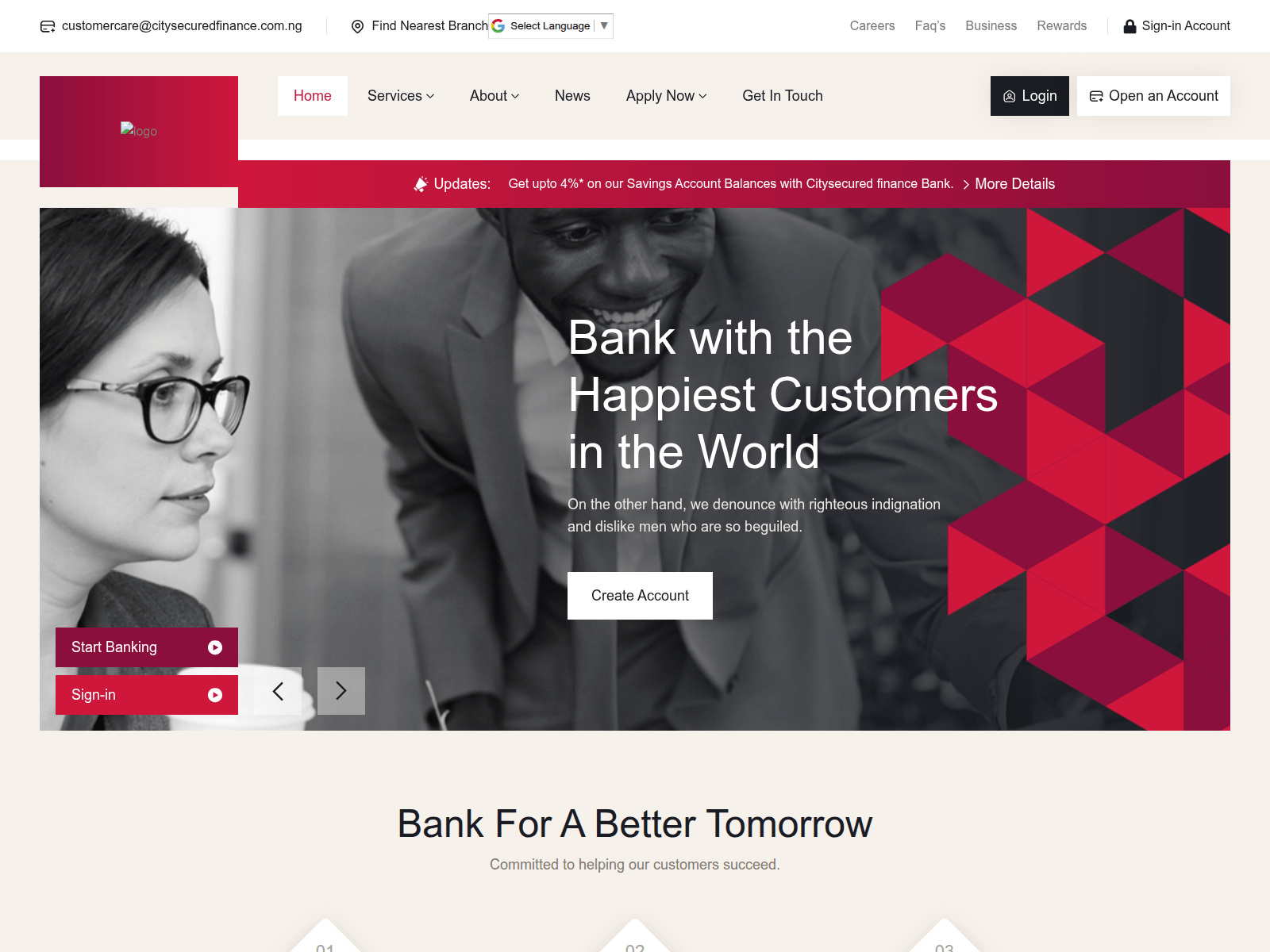
“welcome Citysecured finance Bank –”
CitySecuredFinance.com.ng poses a direct credential-phishing threat, designed to trick users into disclosing sensitive login credentials by impersonating a legitimate financial services domain. This attack vector relies on social engineering tactics, exploiting trust in familiar brand names and urgent financial language to prompt quick, unthoughtful submissions of usernames and passwords. Upon entering credentials, users risk immediate account takeovers, financial theft, or exposure to further spear-phishing campaigns targeting associates and colleagues. The domain’s infrastructure is deliberately configured to appear credible, using a valid Let’s Encrypt SSL certificate to simulate authenticity and reduce suspicion among non-technical users. However, the backend likely logs submissions and relays stolen credentials to unauthorized actors, enabling identity theft, unauthorized account access, and potential corporate or personal data breaches. Given the elevated risk level and active status, this is not a passive threat—it actively harvests credentials from unsuspecting visitors.
This domain was flagged by PhishDestroy after robust detection systems identified its malicious intent. Intelligence gathered shows CitySecuredFinance.com.ng is resolved to IP address 163.61.188.5 and has been analyzed by VirusTotal, where 3 out of 95 security vendors have marked it as suspicious or malicious. The domain uses a Let’s Encrypt SSL certificate to simulate legitimacy, a common tactic among credential theft sites to evade browser warnings and build false trust. While the exact creation date is not publicly available, its active status and presence on multiple threat feeds—despite only partial detection coverage—suggest it is a recently deployed threat actor resource, likely tailored to target unsuspecting users seeking financial services online.
If you have visited CitySecuredFinance.com.ng and entered any login credentials, immediately change the affected passwords on secure, unrelated devices and enable multi-factor authentication where available. Check account activity for signs of unauthorized access and monitor for phishing emails referencing this visit. Do not click any links or download files from the domain. Report the incident to your IT/security team if you used corporate credentials. Use a trusted ad-blocker or browser extension like uBlock Origin to block malicious domains proactively. If you suspect broader exposure, consider freezing credit reports via major bureaus (Experian, Equifax, TransUnion) and alert your bank of potential fraud. Always verify URLs carefully, use password managers to detect fake login pages, and access financial services only through official websites or verified mobile apps with HTTPS and valid certificates.

10 überwachte externe Feeds · gespeicherter Stand 12.08.2026

9 Technologien mit hoher Konfidenz erkannt
Google PageSpeed Insights — mobile performance audit of citysecuredfinance.com.ng · checked May 17, 2026
Diese Ursprungs-IP hostet mehrere Phishing-Domänen – die Infrastruktur kann kampagnenübergreifend gemeinsam genutzt werden.
Kürzlich hinzugefügte Berichte aus der PhishDestroy-Datenbank. Diese Discovery-Links implizieren keine gemeinsame Nutzung der Infrastruktur oder des Eigentums.
Wenn Sie Kontoanmeldeinformationen, persönliche oder Zahlungsinformationen eingegeben oder eine Datei von dieser Domain heruntergeladen haben, ergreifen Sie sofort Maßnahmen. Nachfolgend finden Sie Ressourcen, die Ihnen helfen, den Vorfall zu melden und sich zu schützen.


Wählen Sie Ihr Land aus, um Offizielle Kontakte im Bereich Cyberkriminalität oder einen Beschwerdeentwurf erstellen → zu erhalten.
Bedrohungsanalyse anhand gespeicherter Blocklisten, WHOIS, DNS und öffentlicher Scan-Beweise
Jetzt scannenMelden Sie verdächtige Domains an unsere Bedrohungsdatenbank – schützen Sie die Community
MeldenAktuelle Phishing-Meldungen und beobachtete Verfügbarkeitsänderungen
ÜberwachenBeobachten Sie aktuelle Bedrohungen oder legen Sie Widerspruch gegen diesen Eintrag ein, wenn Sie der Meinung sind, dass es sich um einen Fehlalarm handelt