coinchief-login.com
  www.yubit-login.at
  stresser.pw
  ipstresser.ru
FBI IC3
Melden Sie internetbasierte Kriminalität in den Vereinigten Staaten
Federal tips line1-800-CALL-FBI
The sent-report ledger records the first outgoing report at . A report was sent to the recorded registrar; contact details remain in Domain Intelligence. The latest stored availability evidence still shows the domain reachable; 5 months has elapsed since the first outgoing report.
ICANN RAA §3.18 describes registrar abuse-contact and handling obligations. This section records outgoing timestamps and later availability. It does not by itself prove receipt, acknowledgement, investigation, remediation, or contractual non-compliance.

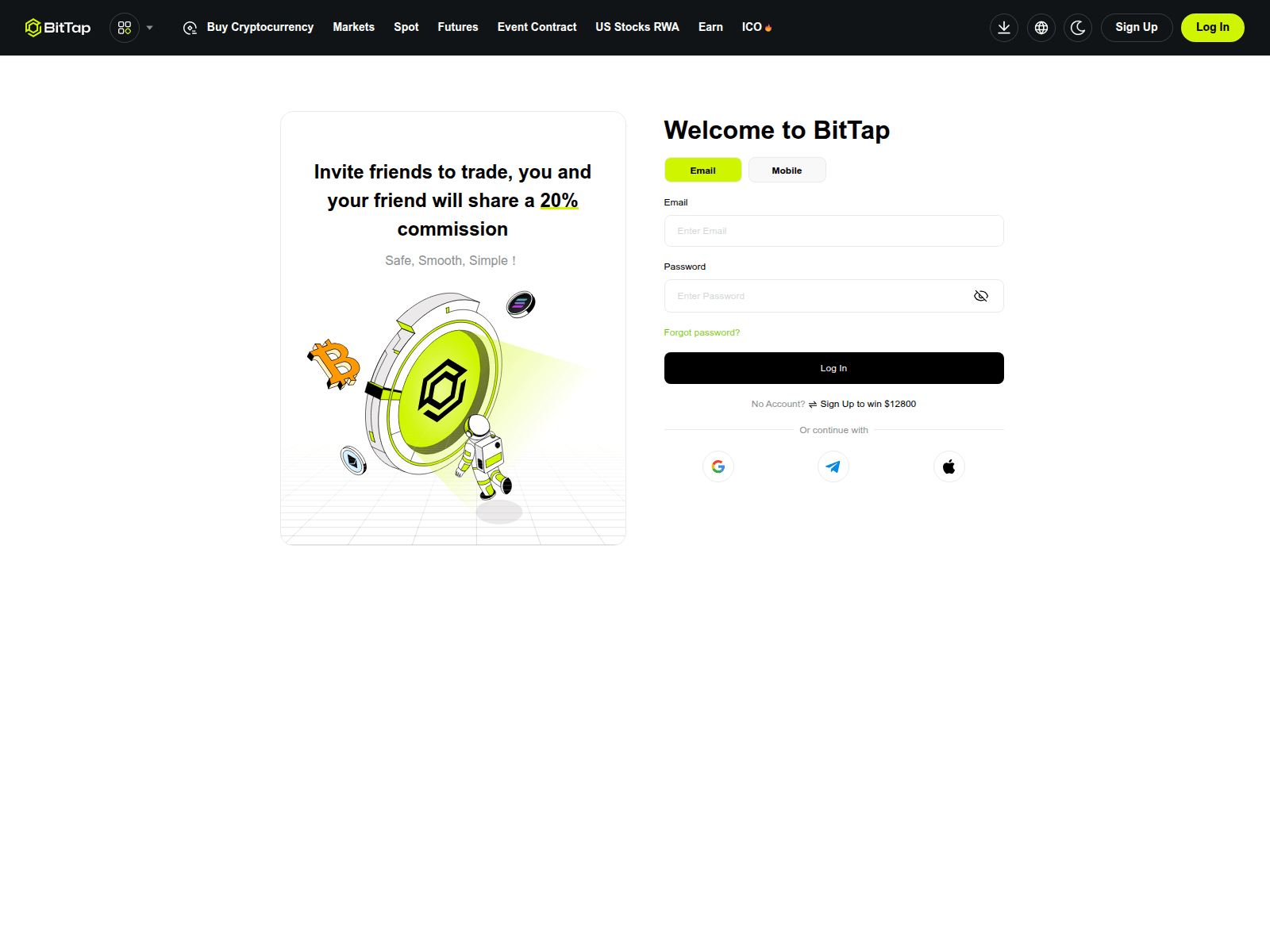
“BitTap Login Panel | Exchange Sign In Instructions”
The domain bittap-login.at was registered on 27 February 2026 and is currently active. The site presents a login interface titled “BitTap Login Panel | Exchange Sign In Instructions,” which is a clear attempt to emulate Microsoft Exchange authentication pages. The activity aligns with credential‑phishing campaigns targeting enterprise users who access Exchange services.
Network analysis shows the domain resolves to IP 186.2.175.29, which belongs to ASN 59692 (IQWeb FZ‑LLC) and is geolocated in Belize. The domain is served behind CloudNS nameservers (pns71.cloudns.net, pns72.cloudns.com, pns73.cloudns.net, pns74.cloudns.uk) and uses a Let’s Encrypt R13 TLS certificate, indicating a recent automated certificate issuance. Front‑end libraries detected include jQuery and Hammer.js, while DDoS‑Guard is present, suggesting the operator is leveraging a third‑party DDoS mitigation service.
VirusTotal has flagged the domain by 2 of 95 security vendors, and Gridinsoft assigns a trust score of 0 / 100. The site appears on a single external blocklist and has been added to the PhishDestroy blocklist, confirming that at least one phishing‑specific feed has identified it as malicious. HTTP response code is 200, indicating the page is delivering content without redirection.
Defenders should immediately block bittap-login.at at the DNS or proxy level and monitor outbound connections to 186.2.175.29. Email security gateways should be tuned to detect Exchange‑style credential requests and to quarantine messages containing URLs that reference this domain. While the visible page title and infrastructure provide strong evidence of a fake Exchange login, the full payload and any additional malicious modules remain unknown; continuous traffic analysis is advised to detect possible credential harvesting or downstream command‑and‑control activity.
PD-20260227-7E5991
10 überwachte externe Feeds · gespeicherter Stand 13.08.2026
Cloudflare-Radar-Scan gespeichert · Scan öffnen
1 → 2
Von 1 Community-Mitglied gemeldet; erstmals gesehen am 27.02.2026
 (MY)
(MY)

Google PageSpeed Insights — mobile performance audit of bittap-login.at · checked Mar 2, 2026
Diese Ursprungs-IP hostet mehrere Phishing-Domänen – die Infrastruktur kann kampagnenübergreifend gemeinsam genutzt werden.
Kürzlich hinzugefügte Berichte aus der PhishDestroy-Datenbank. Diese Discovery-Links implizieren keine gemeinsame Nutzung der Infrastruktur oder des Eigentums.
Wenn Sie Kontoanmeldeinformationen, persönliche oder Zahlungsinformationen eingegeben oder eine Datei von dieser Domain heruntergeladen haben, ergreifen Sie sofort Maßnahmen. Nachfolgend finden Sie Ressourcen, die Ihnen helfen, den Vorfall zu melden und sich zu schützen.


Wählen Sie Ihr Land aus, um Offizielle Kontakte im Bereich Cyberkriminalität oder einen Beschwerdeentwurf erstellen → zu erhalten.
Bedrohungsanalyse anhand gespeicherter Blocklisten, WHOIS, DNS und öffentlicher Scan-Beweise
Jetzt scannenMelden Sie verdächtige Domains an unsere Bedrohungsdatenbank – schützen Sie die Community
MeldenAktuelle Phishing-Meldungen und beobachtete Verfügbarkeitsänderungen
ÜberwachenBeobachten Sie aktuelle Bedrohungen oder legen Sie Widerspruch gegen diesen Eintrag ein, wenn Sie der Meinung sind, dass es sich um einen Fehlalarm handelt