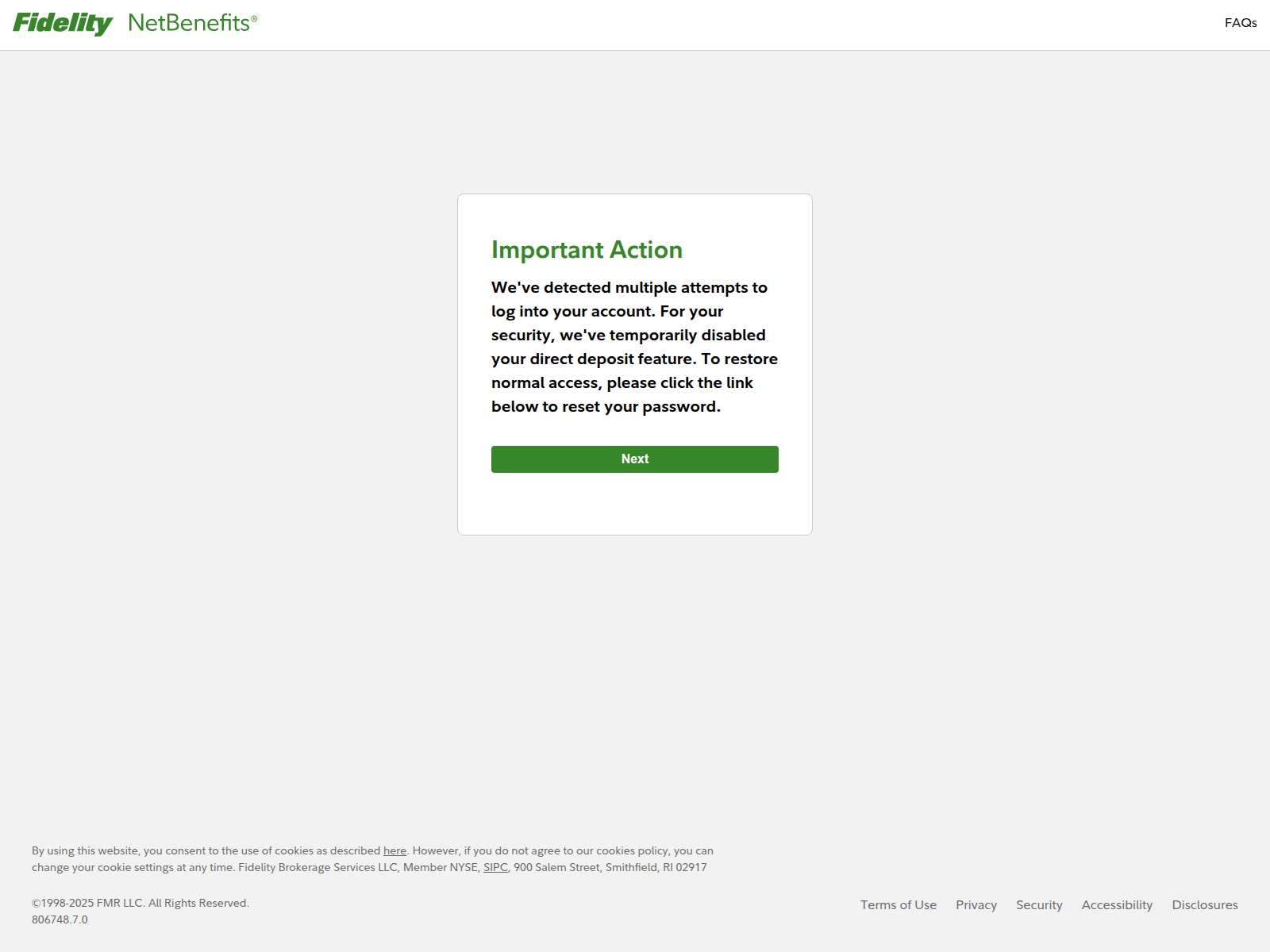
shopeeinc1111.blogspot.com
域安全和威胁情报

fidelityworkplacemc[.]click
“Log In to Fidelity NetBenefits”
威胁判定
关键
86/100 证据评分
可用性
内容不可用
最新观察中的内容不可用
风险信号
病毒检测总数:12/95
品牌冒充:Fidelity
证据摘要
重要
Analysis of fidelityworkplacemc.click shows a confirmed banking phishing infrastructure targeting Fidelity NetBenefits users. The site was registered on February 21, 2026 and currently resolves to IP address 43.162.124.172, which is associated with a Tencent‑owned hosting facility in the United States (AS132203). The page title "Log In to Fidelity NetBenefits" aligns with the reported scam type of banking phishing, indicating an attempt to harvest credential data for the Fidelity brand. The domain appears on one external security blocklist and is actively blocked by PhishDestroy, demonstrating that it has already been identified and mitigated by at least one commercial mitigation service.
VirusTotal scans have recorded 12 positive detections out of 95 security vendors, reinforcing the malicious classification. AlienVault OTX lists the domain in 14 separate threat‑intel pulses, providing additional community corroboration of its malicious use. The SSL certificate is rated E7, suggesting a weak or mis‑issued certificate that further diminishes trust. Gridinsoft assigns a trust score of 0/100, indicating the highest level of suspicion.
Although the site is presently offline, the underlying IP and hosting environment remain active, and the indicators may be reused for future phishing campaigns. Defenders should immediately block the domain and its resolved IP at perimeter firewalls and DNS filtering solutions. Adding the domain to internal blocklists, monitoring for newly created domains that resolve to the same IP range, and correlating any user‑reported Fidelity NetBenefits login attempts with this indicator are recommended. Continuous observation of threat‑intel feeds for additional pulses referencing the same IP or certificate will help detect potential re‑deployment of the infrastructure.
VirusTotal
12 det.
OTX references
TLS 证书
已过期或未验证
年龄
6 mo
观测状态
内容不可用 HTTP 502

DestroyList
已列入
Data Coverage
VirusTotal
12 / 95
URLQuery
报告已存储 — 详细判决待定
PhishStats
未检查
OTX
14 community references
CF雷达
no data
URLScan capture
存储的报告
URLScan verdict
malicious
DNS 阻断
未检查
TLS
已过期或未验证
WHOIS
6 mo old
屏幕截图
2 captures · 2 sources
重定向链
未探查
威胁响应 Pipeline
发现
Checks
Reports
可用性
12/13
阻止列表覆盖
监控中的外部数据源 10 个 · 已存快照 2026年8月11日
已保存的截图
域名情报
域名
URLScan Verdict
恶意
score 100 Phishing brand: Fidelity report ↗
服务器 / ASN
AS132203 TENCENT-NET-AP-CN Tencent Building, Kejizhongyi Avenue, CN
IP 信誉
IP abuse confidence 0/100 1 report checked 2026年6月15日
注册信息创建 2026年2月21日 (171d)
HTTP 状态码502 Error
技术详情DNS、TLS 名称和时间戳
首次发现2026年2月26日
DOM Analysisanalyzed 2026年3月24日DOM analysis score 83/100
取证情报
举报此域名
提交证据,帮助保护他人
VirusTotal 分析
12 / 95 安全供应商标记了该域
View on VT
Last analyzed
ADMINUSLabs
Criminal IP
alphaMountain.ai
Certego
CRDF
CyRadar
Forcepoint ThreatSeeker
Fortinet
Phishing Database
Seclookup
SOCRadar
Webroot
相关基础设施与报告
Content matches 4
Shared IP 43.162.124.172 6
该源 IP 托管多个网络钓鱼域 - 基础设施可以在各个活动之间共享。
Fidelity impersonation 8
These domains also target Fidelity users. View all Fidelity threats →
最近的威胁报告 4
最近添加了来自 PhishDestroy 数据库的报告。这些发现链接并不意味着共享基础设施或所有权。
您是否受到本网站的影响?
If credentials were compromised, report immediately. Do not engage with recovery scammers.
如果您输入了帐户凭据、个人或付款信息,或者从此域下载了文件,请立即采取措施。以下资源可帮助您报告事件并保护自己。


PhishDestroy listing review 不是执法报告
域名申诉
如果您拥有该域名并认为该列表不正确,请请求审核
警惕“数据恢复”诈骗! 犯罪分子可能会冒充调查员、律师或追债员再次联系受害者。 请勿支付预付费用或共享凭证。 了解有关康复欺诈的更多信息 →
检查任意域名
使用存储的阻止列表、WHOIS、DNS 和公共扫描证据进行威胁分析
立即扫描举报网络钓鱼
将可疑域名提交至我们的威胁数据库——保护社区
报告实时威胁动态
最近的网络钓鱼报告和观察到的可用性变化
监控