info-resmi043.blogspot.com
  facebookaccountrecovery.blogspot.com
  phantom-wallett.blogspot.hk
  uphold-wallet-io.blogspot.ru
  uphold-comlogin.blogspot.it
  coiinbase-logiin.blogspot.co.ke
  loginaccountfacebook.blogspot.com
  sk-facebook.blogspot.com
  instagram-signin.blogspot.com
  facebook-9.blogspot.com
  facebook-login65.blogspot.com
  updateadsinfocode4443.blogspot.com
  649715-coinbase.com
  pumplive.solstream.cc
Sicurezza del dominio e intelligence sulle minacce

coinbasesupportnumberhelp[.]blogspot[.]com
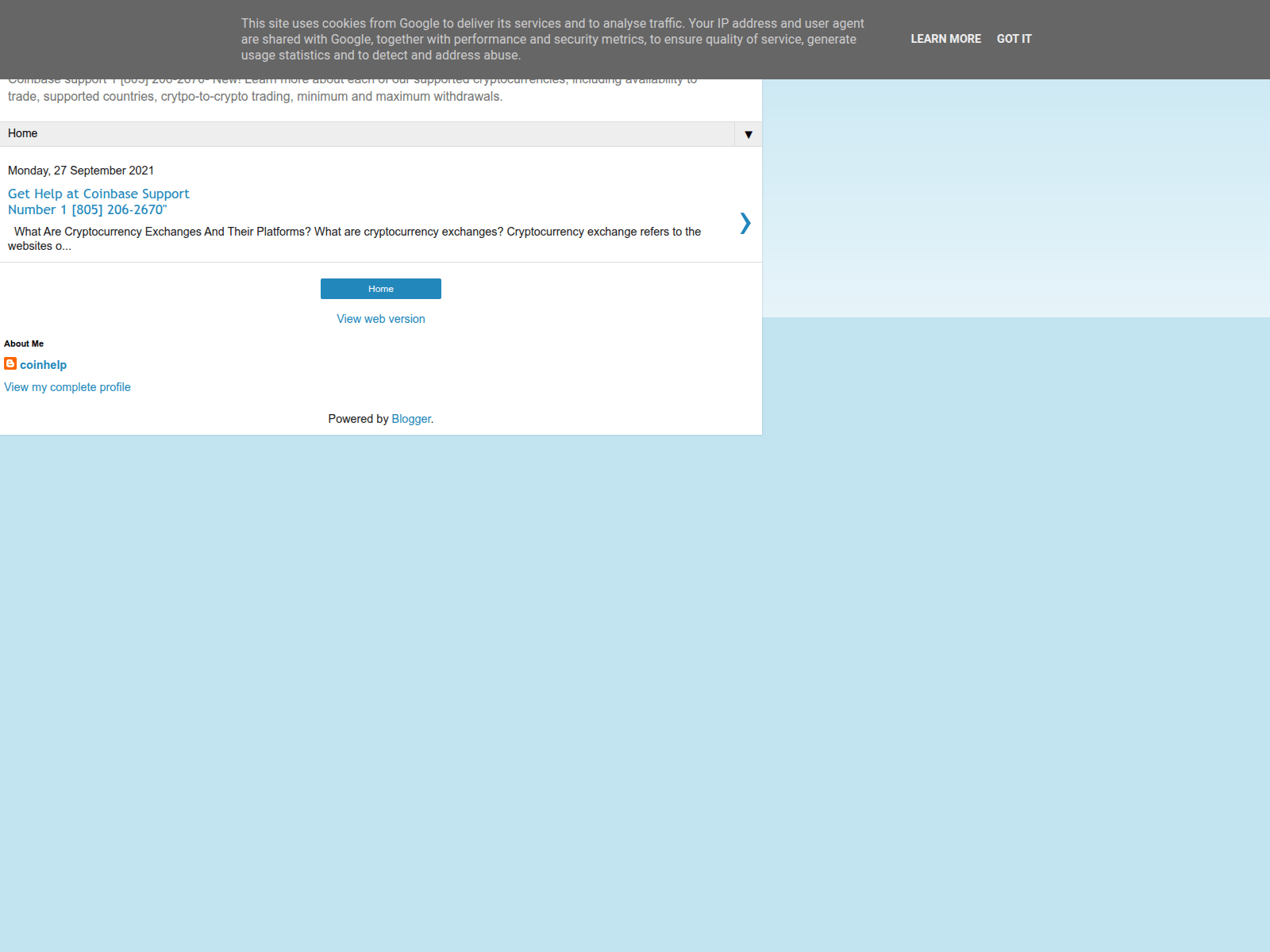
“Get Help at Coinbase Support Number 1 [805] 206-2670"”
Verdetto di minaccia
Critico
Punteggio delle prove 80/100
Disponibilità
Contenuto non disponibile
Il contenuto non era disponibile nell'ultima osservazione
Segnali di rischio
Rilevamenti VirusTotal: 2/94
Corrispondenze della blocklist memorizzate: 2
Simulazione del marchio: Coinbase
Osservazione memorizzata
Contrasto dei titoli osservato
Titolo mostrato allo scannerBlog not found
Titolo mostrato al visitatoreGet Help at Coinbase Support Number 1 [805] 206-2670"
Riepilogo delle prove
CRITICO
This domain, coinbasesupportnumberhelp.blogspot.com, operates as a confirmed brand impersonation scam targeting users of the cryptocurrency exchange Coinbase. The site presents itself as an official support portal, displaying a fraudulent support phone number (1 [805] 206-2670) to deceive victims into divulging sensitive account credentials or initiating unauthorized transactions. Analysis of the page title, 'Get Help at Coinbase Support Number 1 [805] 206-2670,' confirms the intent to mimic legitimate customer service channels, a common tactic in social engineering attacks targeting financial platforms. The presence of this phone number, combined with the domain's structure, suggests a scheme designed to exploit users seeking urgent assistance, potentially leading to account takeovers or financial theft.
Technical indicators strongly support the malicious classification of this domain. The site was created on March 26, 2026, and is registered through Google Blogger, a platform frequently abused for hosting impersonation content due to its ease of deployment. VirusTotal analysis reveals that 12 out of 95 security vendors flag the domain as malicious, while it appears on three distinct security blocklists. Google Safe Browsing has categorized the domain under 'SOCIAL_ENGINEERING,' further validating its deceptive nature. The domain resolves to the IP address 142.250.201.65, and infrastructure analysis detects technologies such as Blogger, Java, Python, OpenGSE, and Google AdSense, which are consistent with fraudulent sites leveraging automated tools for rapid deployment and monetization.
Users who visited coinbasesupportnumberhelp.blogspot.com or interacted with the displayed phone number should take immediate action to mitigate potential risks. Disconnect any active sessions associated with the domain and revoke access to any linked accounts, particularly those tied to Coinbase or other financial services. Monitor account activity for unauthorized transactions or changes in security settings, and report any suspicious behavior to the legitimate platform. If credentials were entered on the site, reset passwords and enable multi-factor authentication (MFA) using non-SMS-based methods. Additionally, scan the device used to access the domain for malware, as impersonation sites may deploy malicious payloads or redirect to exploit kits. Exercise heightened caution with unsolicited communications, especially those claiming to offer support or urgent account interventions.
VirusTotal
2 det.
Certificato TLS
Google Trust Services
Età
5 mo
Stato osservato
Contenuto non disponibile HTTP 404

Elenco da eliminare
Presente
Data Coverage
VirusTotal
2 / 94
URLQuery
checked — no detections recorded
PhishStats
non controllato
OTX
not queried
CF Radar
scan completed
URLScan capture
rapporto memorizzato
URLScan verdict
malicious
Blocchi DNS
non controllato
TLS
valid certificate, 65d
WHOIS
5 mo old
Screenshot
3 captures · 3 sources
Catena di reindirizzamenti
non sondato
Pipeline di risposta alle minacce
Scoperta
Checks
Reports
Disponibilità
13/14
Copertura delle blocklist
10 fonti esterne monitorate · snapshot del 12/08/2026
8 fonti esterne monitorate Nessuna corrispondenza
Cronologia del rilevamento
-
Cloudflare Radar
Scansione Cloudflare Radar archiviata · Apri scansione
-
VirusTotal
2 → 12
Acquisizione salvata
Analisi dei domini
Dominio
URLScan Verdict
Malevolo
score 100 Phishing brand: Coinbase report ↗
Google Safe Browsing
Contrassegnato
Social engineering checked 26/06/2026
Server / ASN
GSE · AS15169 Google LLC
Reputazione IP
IP abuse confidence 0/100 0 reports checked 14/07/2026
Fornitore della piattaforma
Google Blogger
 (US)
(US)
(US)
Indirizzo IP
142.250.201.65
Stato HTTP404 Not Found
Dettagli tecniciDNS, nomi TLS e date
Rilevato per la prima volta26/03/2026
Submitted URLhttp://coinbasesupportnumberhelp.blogspot.com/
Impronta TLS
Osservazione TLSvalido dal 09/03/2026analizzato il 27/03/2026
Nomi alternativi del soggetto TLSblogspot.aeblogspot.alblogspot.amblogspot.bablogspot.beblogspot.bgblogspot.cablogspot.chblogspot.clblogspot.co.atblogspot.co.idblogspot.co.ilblogspot.co.keblogspot.co.nzblogspot.co.uk+55
Segnala questo dominio
Invia le prove e contribuisci a proteggere gli altri
Analisi di VirusTotal
2 / I fornitori di sicurezza 94 hanno contrassegnato questo dominio
View on VT
Last analyzed
Kaspersky
LevelBlue
Analisi delle prestazioni del sito
Google PageSpeed Insights — mobile performance audit of coinbasesupportnumberhelp.blogspot.com · checked Jun 26, 2026
87
Needs Work
Performance
FCP
3.01s
First Contentful Paint
LCP
3.16s
Largest Contentful Paint
CLS
0
Cumulative Layout Shift
TBT
0ms
Total Blocking Time
SI
3.21s
Speed Index
Powered by Google PageSpeed Insights · Mobile strategy · Scores: 90-100 Good 50-89 Needs Work 0-49 Poor
Infrastruttura e rapporti correlati
Shared IP 142.250.201.65 6
Questo IP di origine ospita più domini di phishing: l'infrastruttura può essere condivisa tra campagne.
Stesso registrar: Google Blogger 6
Coinbase impersonation 8
These domains also target Coinbase users. View all Coinbase threats →
Rapporti recenti sulle minacce 6
Rapporti aggiunti di recente dal database PhishDestroy. Questi collegamenti di scoperta non implicano infrastrutture o proprietà condivise.
Questo sito ti ha influenzato in qualche modo?
If credentials were compromised, report immediately. Do not engage with recovery scammers.
Se hai inserito credenziali dell'account, informazioni personali o di pagamento oppure hai scaricato un file da questo dominio, agisci immediatamente. Di seguito sono riportate le risorse per aiutarti a segnalare l'incidente e proteggerti.

Europol
Trova il canale di segnalazione ufficiale per il tuo paese dell'UE
National police directory

Action Fraud
Segnala frodi e crimini informatici in Inghilterra, Galles e Irlanda del Nord
Contact centre0300 123 2040
PhishDestroy listing review Non un rapporto delle forze dell'ordine
Ricorso in materia di domini
Richiedi una revisione se possiedi questo dominio e ritieni che l'elenco non sia corretto
Attenzione ai truffatori che promettono il recupero dei fondi! I criminali possono contattare nuovamente le vittime fingendo di essere investigatori, avvocati o agenti di recupero. Non pagare commissioni anticipate né condividere credenziali. Scopri di più sulle frodi relative ai sussidi di recupero →
Segnalalo alle autorità locali
Seleziona il tuo Paese per ottenere contatti ufficiali del crimine informatico o creare una bozza di reclamo →.
Elenco di 97 paesi
Bozza assistita dall'intelligenza artificiale: i dettagli dell'incidente vengono elaborati dal fornitore di intelligenza artificiale
Controllalo e invialo tu stesso
Verifica qualsiasi dominio
Analisi delle minacce utilizzando blocklist archiviate, WHOIS, DNS e prove di scansione pubblica
Scansiona oraSegnala un tentativo di phishing
Segnala i domini sospetti al nostro database delle minacce — proteggi la comunità
SegnalaFeed in tempo reale sulle minacce
Segnalazioni recenti di phishing e modifiche osservate della disponibilità
MonitoraRimani informato, rimani al sicuro
Controlla le minacce in tempo reale oppure contesta questa segnalazione se ritieni che si tratti di un falso positivo