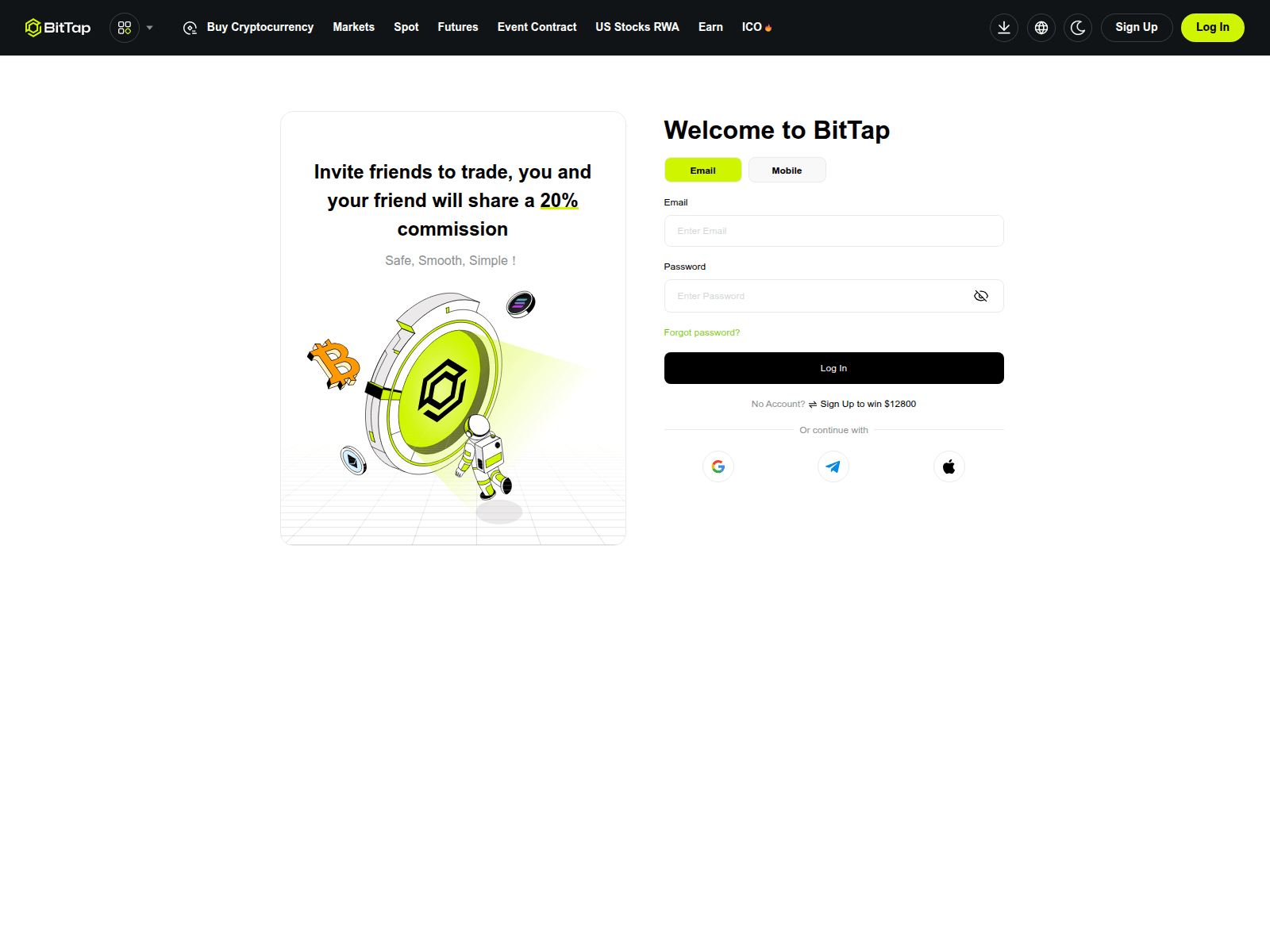
coinchief-login.com
  www.yubit-login.at
  dfximpact.live
  ethguanfangweiyilianjie.com
  irsgovtreasury.dev
ABUSE NOTICE · 7D+ OPEN
Outgoing abuse reports are recorded; the latest stored availability evidence still shows the domain reachable.
Notification and current-status evidence
The sent-report ledger records the first outgoing report at . A report was sent to the recorded registrar; contact details remain in Domain Intelligence. The latest stored availability evidence still shows the domain reachable; 5 months has elapsed since the first outgoing report.
ICANN RAA §3.18 describes registrar abuse-contact and handling obligations. This section records outgoing timestamps and later availability. It does not by itself prove receipt, acknowledgement, investigation, remediation, or contractual non-compliance.
Elapsed since first report
5 months
Reports sent
1
Current status
Observed active at latest stored check
Sicurezza del dominio e intelligence sulle minacce

bittap-login[.]at
“BitTap Login Panel | Exchange Sign In Instructions”
Verdetto di minaccia
Critico
Punteggio delle prove 71/100
Disponibilità
Non verificato
La raggiungibilità attuale non è verificata
Segnali di rischio
Rilevamenti VirusTotal: 5/91
Spamhaus DBL: DBL_PHISH
Tipo di truffa: Fake Exchange
Riepilogo delle prove
CRITICO
The domain bittap-login.at was registered on 27 February 2026 and is currently active. The site presents a login interface titled “BitTap Login Panel | Exchange Sign In Instructions,” which is a clear attempt to emulate Microsoft Exchange authentication pages. The activity aligns with credential‑phishing campaigns targeting enterprise users who access Exchange services.
Network analysis shows the domain resolves to IP 186.2.175.29, which belongs to ASN 59692 (IQWeb FZ‑LLC) and is geolocated in Belize. The domain is served behind CloudNS nameservers (pns71.cloudns.net, pns72.cloudns.com, pns73.cloudns.net, pns74.cloudns.uk) and uses a Let’s Encrypt R13 TLS certificate, indicating a recent automated certificate issuance. Front‑end libraries detected include jQuery and Hammer.js, while DDoS‑Guard is present, suggesting the operator is leveraging a third‑party DDoS mitigation service.
VirusTotal has flagged the domain by 2 of 95 security vendors, and Gridinsoft assigns a trust score of 0 / 100. The site appears on a single external blocklist and has been added to the PhishDestroy blocklist, confirming that at least one phishing‑specific feed has identified it as malicious. HTTP response code is 200, indicating the page is delivering content without redirection.
Defenders should immediately block bittap-login.at at the DNS or proxy level and monitor outbound connections to 186.2.175.29. Email security gateways should be tuned to detect Exchange‑style credential requests and to quarantine messages containing URLs that reference this domain. While the visible page title and infrastructure provide strong evidence of a fake Exchange login, the full payload and any additional malicious modules remain unknown; continuous traffic analysis is advised to detect possible credential harvesting or downstream command‑and‑control activity.
Istantanea delle prove inviate
- Inviato
- Voci del registro
- 1
- ID del caso
PD-20260227-7E5991- Titolo della pagina acquisita
- BitTap Login Panel | Exchange Sign In Instructions
- Artefatto PDF
- Prova in PDF
Base giuridica
Testo completo delle prove
Policy Violations:
Illegal Activities: Active phishing operation targeting victims
Fraud & Deception: Impersonation of legitimate services
Identity Theft: Collection of credentials under false pretenses
Applicable Laws (Unknown):
International Anti-Cybercrime Regulations
Budapest Convention on Cybercrime
Universal Fraud Prevention Laws
Phishing activities violate international cybercrime conventions and Unknown's domestic fraud laws.
Action Required: This evidence-backed report demonstrates clear violations requiring suspension per your policies. Continued hosting exposes your organization to regulatory scrutiny and potential legal liability.
Illegal Activities: Active phishing operation targeting victims
Fraud & Deception: Impersonation of legitimate services
Identity Theft: Collection of credentials under false pretenses
Applicable Laws (Unknown):
International Anti-Cybercrime Regulations
Budapest Convention on Cybercrime
Universal Fraud Prevention Laws
Phishing activities violate international cybercrime conventions and Unknown's domestic fraud laws.
Action Required: This evidence-backed report demonstrates clear violations requiring suspension per your policies. Continued hosting exposes your organization to regulatory scrutiny and potential legal liability.
VirusTotal
5 det.
Certificato TLS
Let's Encrypt
Età
6 mo
Stato osservato
Non verificato

Elenco da eliminare
Presente
Reports Sent
1
Data Coverage
VirusTotal
5 / 91
URLQuery
checked — no detections recorded
PhishStats
non controllato
OTX
no community references
CF Radar
scan completed
URLScan capture
rapporto memorizzato
URLScan verdict
Analisi completata
Blocchi DNS
14 verificato — nessun blocco
TLS
valid certificate, 55d
WHOIS
6 mo old
Screenshot
3 captures · 3 sources
Catena di reindirizzamenti
non sondato
Pipeline di risposta alle minacce
Scoperta
Checks
Reports
Disponibilità
10/11
Copertura delle blocklist
10 fonti esterne monitorate · snapshot del 12/08/2026
10 fonti esterne monitorate Nessuna corrispondenza
MetaMask
Nessuna corrispondenza
ScamSniffer
Nessuna corrispondenza
Polkadot
Nessuna corrispondenza
CryptoFirewall
Nessuna corrispondenza
OpenPhish
Nessuna corrispondenza
SEAL
Nessuna corrispondenza
Enkrypt
Nessuna corrispondenza
Phishunt
Nessuna corrispondenza
Codeesura
Nessuna corrispondenza
DiscordPhishing
Nessuna corrispondenza
Cronologia del rilevamento
-
Cloudflare Radar
Scansione Cloudflare Radar archiviata · Apri scansione
-
VirusTotal
1 → 2
Segnalazioni della comunità
Segnalato da 1 membro della comunità; prima osservazione il 27/02/2026
- Segnalazioni memorizzate
- 1
- URL segnalati univoci
- 1
Accettato1
Acquisizione salvata
Analisi dei domini
Dominio
URLScan Verdict
Analisi completata
score 0 report ↗
Server / ASN
ddos-guard · AS59692 IQWeb FZ-LLC
Reputazione IP
IP abuse confidence 0/100 0 reports checked 15/07/2026
Registrar
Iqweb
 (MY)
(MY)
(MY)
Indirizzo IP
186.2.175.29

RegistrazioneCreato 27/02/2026 (166d)
Dettagli tecniciDNS, nomi TLS e date
Rilevato per la prima volta27/02/2026
DOM Analysisanalyzed 09/07/2026DOM analysis score 71/100
Submitted URLhttp://bittap-login.at/
Nameserverpns71.cloudns.netpns72.cloudns.compns73.cloudns.netpns74.cloudns.uk
Osservazione TLSvalido dal 31/01/2026analizzato il 15/03/2026
Favicon Hash
Segnala questo dominio
Invia le prove e contribuisci a proteggere gli altri
Analisi di VirusTotal
5 / I fornitori di sicurezza 91 hanno contrassegnato questo dominio
View on VT
Last analyzed Previous stored snapshot: 2 detections
alphaMountain.ai
CRDF
Forcepoint ThreatSeeker
Fortinet
Gridinsoft
Analisi delle prestazioni del sito
Google PageSpeed Insights — mobile performance audit of bittap-login.at · checked Mar 2, 2026
99
Good
Performance
FCP
1.38s
First Contentful Paint
LCP
1.8s
Largest Contentful Paint
CLS
0
Cumulative Layout Shift
TBT
22ms
Total Blocking Time
SI
2.23s
Speed Index
Powered by Google PageSpeed Insights · Mobile strategy · Scores: 90-100 Good 50-89 Needs Work 0-49 Poor
Infrastruttura e rapporti correlati
Shared IP 186.2.175.29 6
Questo IP di origine ospita più domini di phishing: l'infrastruttura può essere condivisa tra campagne.
Stesso registrar: Iqweb 6
Rapporti recenti sulle minacce 6
Rapporti aggiunti di recente dal database PhishDestroy. Questi collegamenti di scoperta non implicano infrastrutture o proprietà condivise.
Questo sito ti ha influenzato in qualche modo?
If credentials were compromised, report immediately. Do not engage with recovery scammers.
Se hai inserito credenziali dell'account, informazioni personali o di pagamento oppure hai scaricato un file da questo dominio, agisci immediatamente. Di seguito sono riportate le risorse per aiutarti a segnalare l'incidente e proteggerti.

Europol
Trova il canale di segnalazione ufficiale per il tuo paese dell'UE
National police directory

Action Fraud
Segnala frodi e crimini informatici in Inghilterra, Galles e Irlanda del Nord
Contact centre0300 123 2040
PhishDestroy listing review Non un rapporto delle forze dell'ordine
Ricorso in materia di domini
Richiedi una revisione se possiedi questo dominio e ritieni che l'elenco non sia corretto
Attenzione ai truffatori che promettono il recupero dei fondi! I criminali possono contattare nuovamente le vittime fingendo di essere investigatori, avvocati o agenti di recupero. Non pagare commissioni anticipate né condividere credenziali. Scopri di più sulle frodi relative ai sussidi di recupero →
Segnalalo alle autorità locali
Seleziona il tuo Paese per ottenere contatti ufficiali del crimine informatico o creare una bozza di reclamo →.
Elenco di 97 paesi
Bozza assistita dall'intelligenza artificiale: i dettagli dell'incidente vengono elaborati dal fornitore di intelligenza artificiale
Controllalo e invialo tu stesso
Verifica qualsiasi dominio
Analisi delle minacce utilizzando blocklist archiviate, WHOIS, DNS e prove di scansione pubblica
Scansiona oraSegnala un tentativo di phishing
Segnala i domini sospetti al nostro database delle minacce — proteggi la comunità
SegnalaFeed in tempo reale sulle minacce
Segnalazioni recenti di phishing e modifiche osservate della disponibilità
MonitoraRimani informato, rimani al sicuro
Controlla le minacce in tempo reale oppure contesta questa segnalazione se ritieni che si tratti di un falso positivo