VirusTotal
13 / 95
Signaler


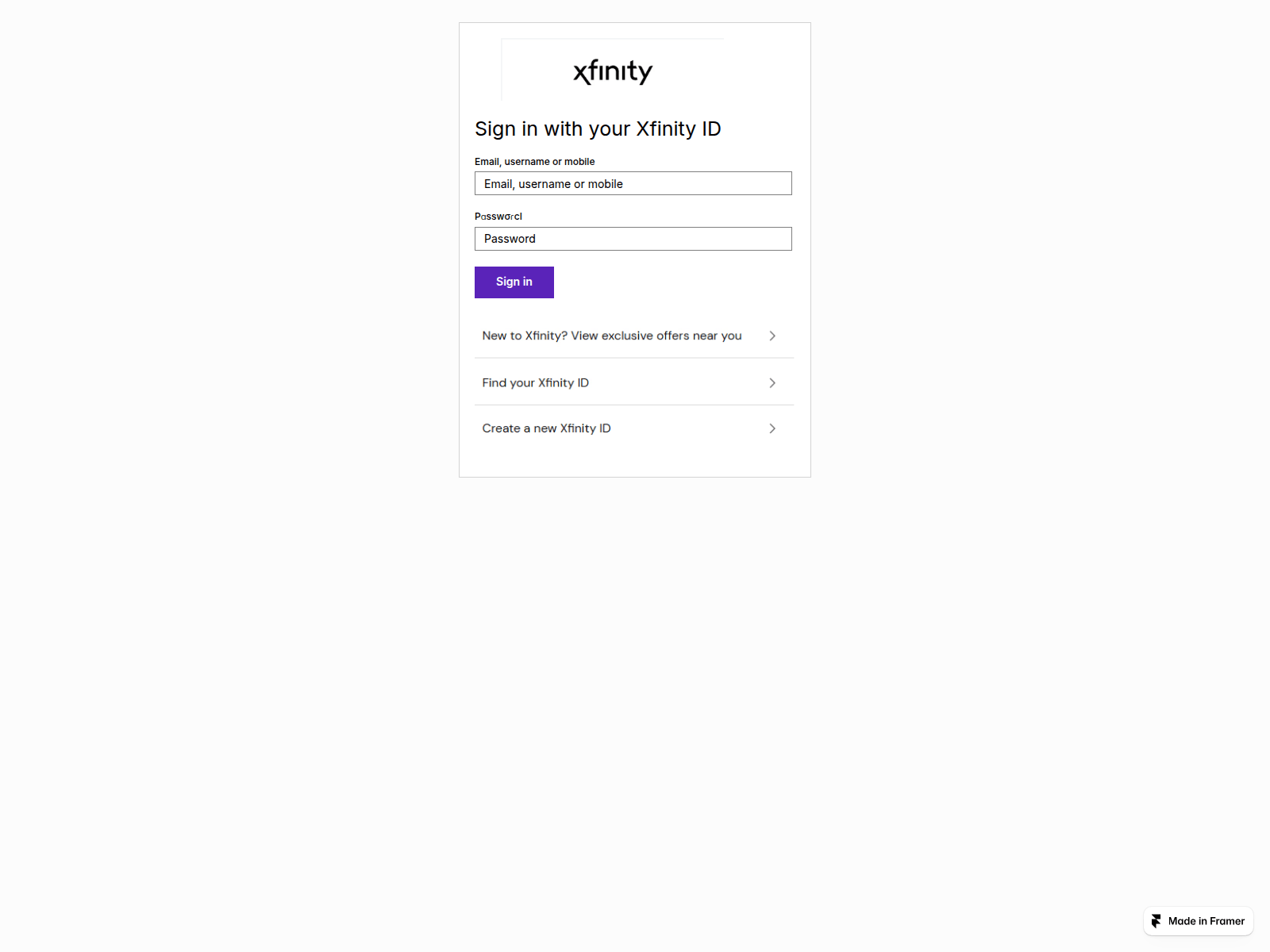
“Xfinity Sign In”
xfinity-sign-101.framer.website — Contenu indisponible (HTTP 404). Usurpation de l'identité de la marque : Xfinity; Type d'arnaque : Credential Phishing. Résumé des preuves: VirusTotal 13/95 (Criminal IP, alphaMountain.ai, BitDefender, CyRadar, ESET); URLQuery 100 det.; URLScan malicious verdict; CF Radar malicious; PhishDestroy score 100/100. Bureau d’enregistrement: CSC.
L’analyse détaillée de PhishDestroy AI reste en anglais afin de préserver le relevé forensique original.

The domain xfinity-sign-101.framer.website was observed delivering a credential‑phishing page titled “Xfinity Sign In”. The site resolved to the Amazon‑hosted address 52.223.52.2, an IP owned by AS16509 (Amazon.com, Inc.) located in the United States. Registration data show the domain was created on 19 Nov 2021 through CSC Corporate Domains, Inc., and is served by four AWS Route 53 name servers (ns‑1243.awsdns‑27.org, ns‑1818.awsdns‑35.co.uk, ns‑336.awsdns‑42.com, ns‑792.awsdns). Technical fingerprints indicate the site used the Framer Sites builder, React front‑end framework, and enforced HSTS while supporting HTTP/3.
An SSL certificate issued by Let’s Encrypt (identifier E7) was present, confirming encrypted HTTPS delivery. VirusTotal scans recorded 13 detections out of 95 scanners, and the domain appears on at least one public phishing blocklist, where it was flagged by PhishDestroy. The HTTP response returned a 404 status code at the time of analysis, and the domain is currently listed as taken offline. Evidence confirms the infrastructure was deliberately crafted to impersonate Xfinity and solicit user credentials, matching the “Credential Phishing” classification.
No further activity has been observed since the takedown, but the underlying AWS IP space remains reusable for future campaigns. Defenders should continue to block the domain and its resolved IP, enforce DNS‑level filtering for the *.framer.website suffix, and monitor for new subdomains registered by the same registrar that employ similar technology stacks. Ongoing vigilance of Let’s Encrypt‑issued certificates and rapid VirusTotal re‑scanning can aid early detection of re‑hosted copies.
Enregistrement des observations « crawler contre navigateur » pour cet hôte, ainsi qu'une vérification en temps réel des empreintes numériques pour les systèmes de répartition du trafic de type Keitaro.
Framer/af6a429Note relative à la numérisation: hosting_placeholder: raw=placeholder; http=404; via=https_proxy; server=Framer/af6a429
 (US)
(US)
ns-1243.awsdns-27.orgns-1818.awsdns-35.co.ukns-336.awsdns-42.comns-792.awsdns-35.netLocation describes the IP network.
b3445573cc07ede57a843d22babf8e3b977a95a08dd21a6706de7226e732d6ceSaved certificate metadata. Certificate dates without a timezone are shown as stored. Transport encryption does not establish that the site is trustworthy.
16 recorded events. These records describe collected evidence, outgoing notifications and publication; they do not confirm a complete investigation or a takedown.
We scan suspicious URLs, inspect public results and send evidence through the appropriate abuse-reporting channels. The dated events above show what is recorded for this domain. The directory below explains the wider workflow.
Capture the rendered page, requests and visible infrastructure.
Compare the available engine results and retain the analysis timestamp.
Check whether Google currently lists the URL as unsafe.
Inspect a public scan and its recorded network and classification data.
Look for indicator references and related community intelligence.
Compare archived captures and preserve historical context.
Look for matching indicators and associated threat records.
Inspect certificate records and related hostnames.
Compare security resolver responses and record observed blocking.
Inspect the public DNS, TLS, HTTP and technology surface.
Security services used for scanning, reputation checks and reporting are listed below. A service being listed is not evidence that it received, accepted or acted on this particular domain. Recorded submissions appear in the notification history above.
Signalé par 1 membre de la communauté ; première observation le 30/10/2025
Si vous avez saisi des informations d'identification de compte, des informations personnelles ou de paiement, ou téléchargé un fichier à partir de ce domaine, agissez immédiatement. Vous trouverez ci-dessous des ressources pour vous aider à signaler l'incident et à vous protéger.


Sélectionnez votre pays pour obtenir contacts officiels en matière de cybercriminalité ou créer un projet de plainte →.
Template-based draft · optional AI wording assistance requires separate consent
Chaque ligne correspond à une raison pour laquelle un domaine est associé à cet hébergeur. La taille des nœuds indique les détections de VirusTotal et les nœuds en pointillés sont déjà hors ligne. Les listes complètes figurent ci-dessous.
Même hachage de favicon ou même titre de page que cet hébergeur.
Cette adresse IP d'origine héberge plusieurs domaines de phishing : l'infrastructure peut être partagée entre les campagnes.
Ces domaines ciblent également les utilisateurs d'Xfinity. Afficher toutes les menaces liées à « Xfinity » →
Enregistrés auprès du même bureau d'enregistrement. Un bureau d'enregistrement dessert des millions de clients sans lien entre eux ; ce regroupement constitue donc simplement un constat et ne prouve pas l'existence d'un lien.
Rapports récemment ajoutés à partir de la base de données PhishDestroy. Ces liens de découverte n’impliquent pas d’infrastructure ou de propriété partagée.
Analyse des menaces à l'aide de listes de blocage stockées, de WHOIS, de DNS et de preuves d'analyse publique
Scanner maintenantSignalez les domaines suspects à notre base de données des menaces — protégez la communauté
SignalerRapports de phishing récents et changements de disponibilité observés
SurveillerSurveillez les menaces en temps réel ou signalez cette alerte si vous pensez qu'il s'agit d'un faux positif