ChainPatrol
 Web-Check
  SOCRadar
  LeakIX
IC3 del FBI
Denunciar delitos cometidos a través de Internet en los Estados Unidos
Federal tips line1-800-CALL-FBI

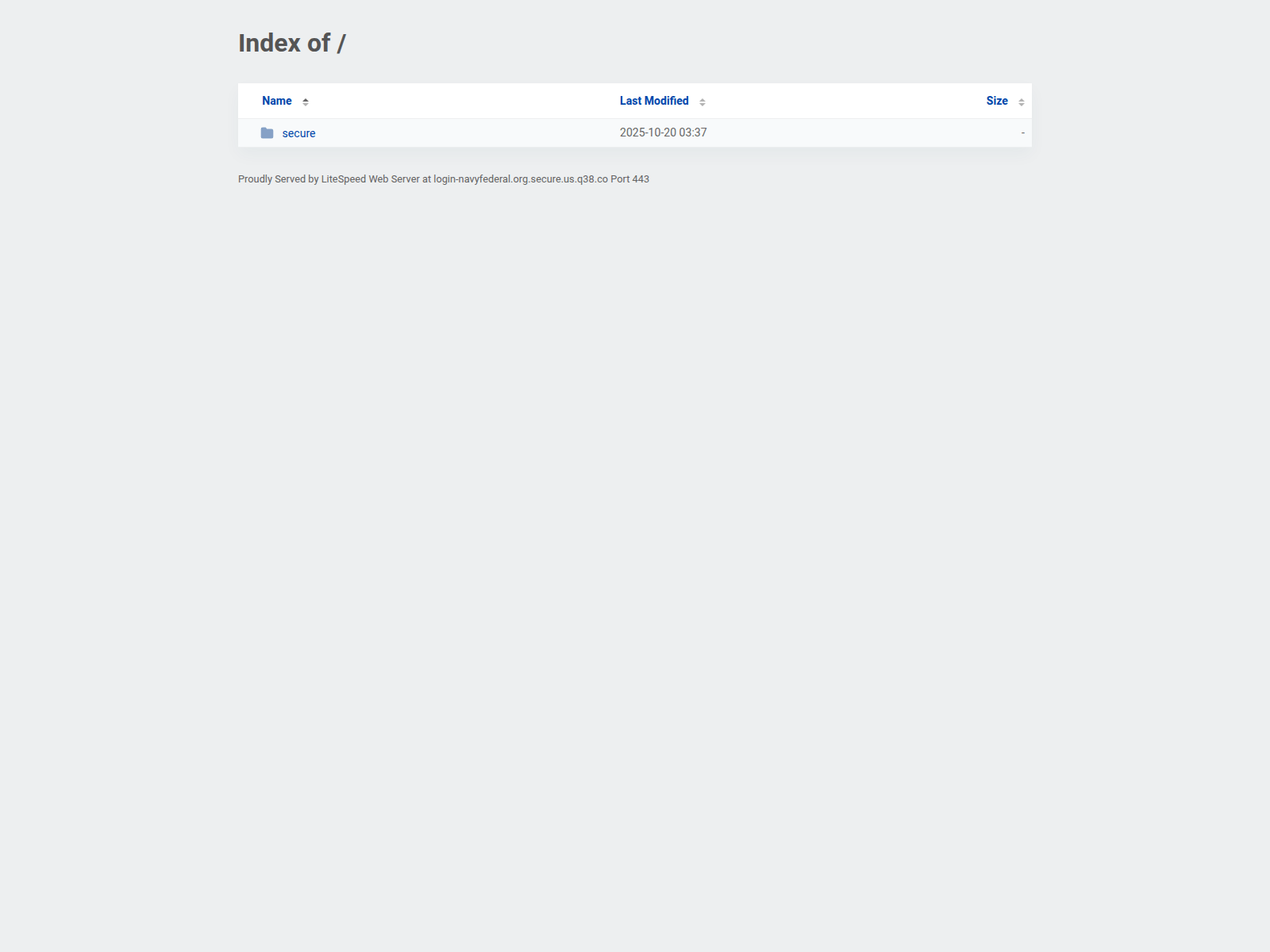
“Index of /”
login-navyfederal.org.secure.us.q38.co — Contenido no disponible (HTTP 502). Tipo de estafa: Credential Phishing. Resumen de las pruebas: VirusTotal 14/95 (ADMINUSLabs, Criminal IP, alphaMountain.ai, BitDefender, CyRadar); PhishDestroy score 92/100. Registrador: NameCheap.
El análisis detallado de PhishDestroy AI se mantiene en inglés para conservar el registro forense original.
This domain, login-navyfederal.org.secure.us.q38.co, is actively engaged in credential phishing targeting users of Navy Federal Credit Union. The infrastructure presents a fraudulent login interface designed to harvest account credentials, including usernames, passwords, and potentially multi-factor authentication codes. Analysis of the domain structure and subdomain path suggests an attempt to mimic legitimate authentication portals, increasing the likelihood of successful deception among unsuspecting users. Infrastructure analysis reveals multiple technical indicators supporting its malicious classification. The domain was registered on September 16, 2025, through NameCheap, Inc., and currently resolves to the IP address 192.142.54.88, hosted in the Netherlands under AS214036 (Ultahost, Inc.). No SSL certificate is present, exposing transmitted data to interception. Security vendors have flagged the domain on VirusTotal, with 14 out of 95 engines detecting malicious activity. Additionally, the domain appears on two security blocklists and is explicitly blocked by PhishDestroy and PhishingDB. The page title, 'Index of /', further indicates misconfigured or intentionally obfuscated server content. Users who visited login-navyfederal.org.secure.us.q38.co should immediately assume their credentials were compromised. Affected individuals must change their Navy Federal account passwords and enable multi-factor authentication if not already active. Monitor the account for unauthorized transactions or configuration changes, such as altered contact details or linked external accounts. Financial institutions should be notified of potential fraud attempts, and users are advised to review connected devices for suspicious activity. If personal or financial data was entered, consider placing a fraud alert with credit bureaus to mitigate identity theft risks.

 (US)
(US)

Si ingresó credenciales de cuenta, información personal o de pago, o descargó un archivo de este dominio, tome medidas inmediatas. A continuación encontrará recursos que le ayudarán a informar el incidente y protegerse.


Seleccione su país para obtener contactos oficiales de cibercrimen o crear un borrador de queja →.
Esta IP de origen aloja múltiples dominios de phishing; la infraestructura puede compartirse entre campañas.
Informes agregados recientemente de la base de datos PhishDestroy. Estos enlaces de descubrimiento no implican infraestructura ni propiedad compartida.
Análisis de amenazas utilizando listas de bloqueo almacenadas, WHOIS, DNS y evidencia de escaneo público
Escanear ahoraEnvía los dominios sospechosos a nuestra base de datos de amenazas: protege a la comunidad
DenunciarInformes de phishing recientes y cambios de disponibilidad observados
MonitorizarSupervisa las amenazas en tiempo real o impugna esta entrada si crees que se trata de un falso positivo.
 globalscourierlogistics.com
  havaianauss.shop
  pokymax.com
  iquantumflux.com
  finglobalheritage.online
  metamask-k.blogspot.com.ng