

 ChainPatrol
 Web-Check
  SOCRadar
  LeakIX
IC3 del FBI
Denunciar delitos cometidos a través de Internet en los Estados Unidos
Federal tips line1-800-CALL-FBI

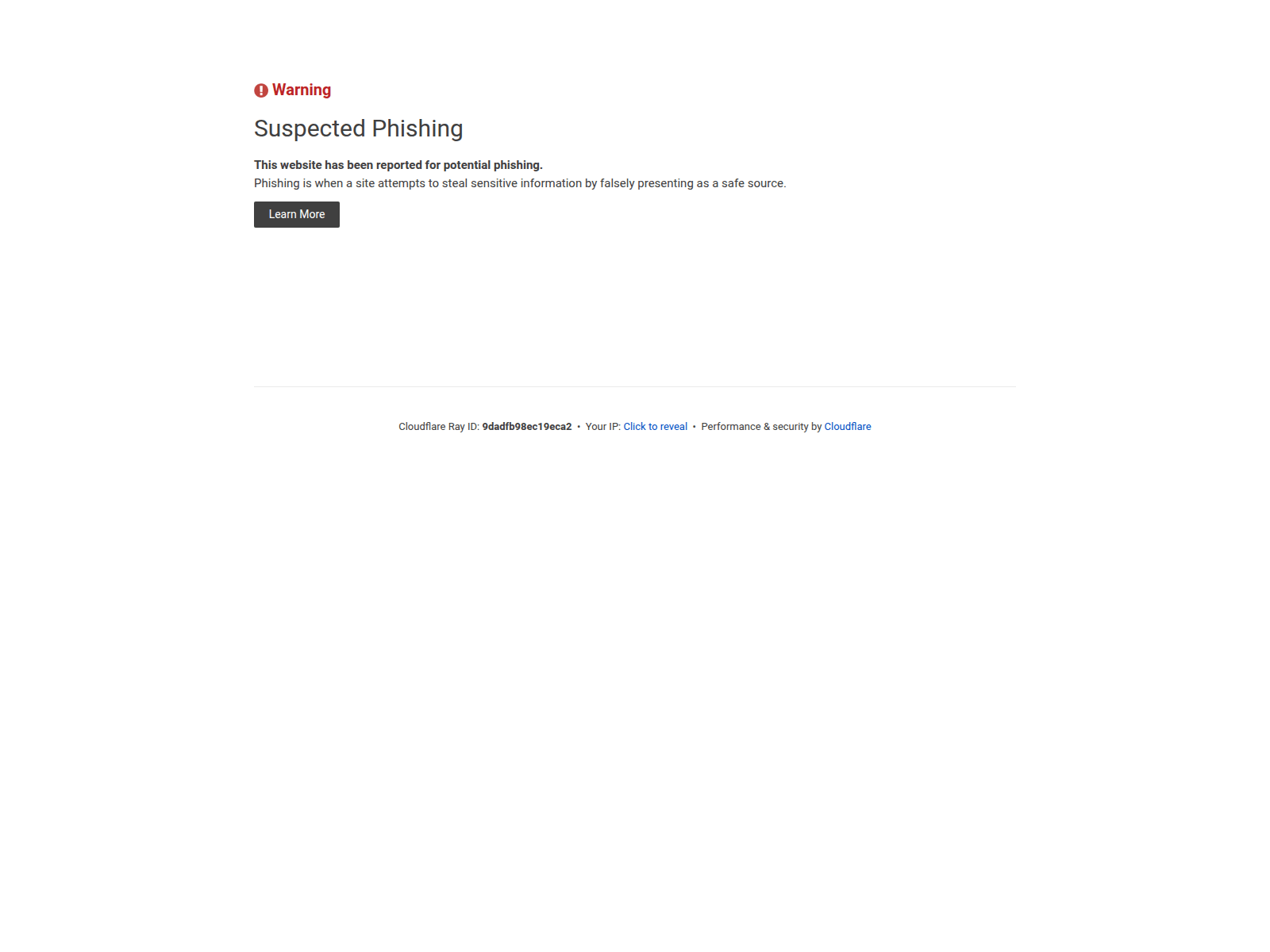
“Suspected phishing site | Cloudflare”
learn-chrome-extenstion-coinbase.pages.dev — Contenido no disponible. Suplantación de marca: Coinbase; Tipo de estafa: Crypto Scam. Resumen de las pruebas: VirusTotal 13/93 (ADMINUSLabs, ChainPatrol, alphaMountain.ai, BitDefender, CyRadar); Google Safe Browsing flagged; PhishDestroy score 89/100. Registrador: Cloudflare.
El análisis detallado de PhishDestroy AI se mantiene en inglés para conservar el registro forense original.
Analysis of learn-chrome-extenstion-coinbase.pages.dev indicates a high‑risk brand‑impersonation campaign targeting Coinbase users. The domain was registered through Cloudflare, Inc. on February 21, 2026 and resolves to IP address 188.114.96.3, which belongs to AS13335 Cloudflare in the United States. The site served an HTTP 403 response and presented the page title “Suspected phishing site | Cloudflare,” confirming that the host has been taken offline. SSL termination is performed by Google Trust Services using the WE1 certificate, and the site employed HSTS, Cloudflare’s CDN, and HTTP/3, suggesting a modern infrastructure that can be rapidly redeployed.
Google Safe Browsing has flagged the domain for social engineering, and VirusTotal recorded detections from 13 of 93 security vendors, reinforcing the malicious intent. The Gridinsoft trust score of 0 / 100 further demonstrates the site’s lack of legitimacy. It appears on a single security blocklist and has been blocked by PhishDestroy. Nameserver records point to joan.ns.cloudflare.com and dean.ns.cloudflare.com, both Cloudflare‑managed, which is consistent with the registrar information.
The campaign is classified as a crypto scam, leveraging the Coinbase brand to lure victims into credential or fund theft. No visual or content analysis is available beyond the page title, so the exact phishing vectors remain unknown. Defenders should immediately block the domain and its associated IP, incorporate the observed indicator set (domain, IP, nameservers, SSL certificate issuer, and detection signatures) into intrusion‑detection and web‑filtering rules, and monitor for similarly structured domains using the “learn‑chrome‑extenstion‑coinbase” naming pattern. Continuous watch of Cloudflare‑hosted assets and rapid response to new detections are recommended to mitigate further abuse.

 (US)
San Francisco, US
(US)
San Francisco, USHTTP Strict Transport Security (HSTS) informs browsers that the site should only be accessed using HTTPS.
www.rfc-editor.org 100 % de confianzaCloudflare is a web-infrastructure and website-security company, providing content-delivery-network services, DDoS mitigation, Internet security, and distributed domain-name-server services.
www.cloudflare.com 100 % de confianzaHTTP/3 is the third major version of the Hypertext Transfer Protocol used to exchange information on the World Wide Web.
httpwg.org 100 % de confianzaGoogle PageSpeed Insights — mobile performance audit of learn-chrome-extenstion-coinbase.pages.dev · checked Apr 13, 2026
Si ingresó credenciales de cuenta, información personal o de pago, o descargó un archivo de este dominio, tome medidas inmediatas. A continuación encontrará recursos que le ayudarán a informar el incidente y protegerse.


Seleccione su país para obtener contactos oficiales de cibercrimen o crear un borrador de queja →.
Estos informes se resuelven en la misma IP perimetral compartida. Ayudan a descubrir informes, pero no implican una propiedad común ni un servidor de origen compartido.
These domains also target Coinbase users. View all Coinbase threats →
Informes agregados recientemente de la base de datos PhishDestroy. Estos enlaces de descubrimiento no implican infraestructura ni propiedad compartida.
Análisis de amenazas utilizando listas de bloqueo almacenadas, WHOIS, DNS y evidencia de escaneo público
Escanear ahoraEnvía los dominios sospechosos a nuestra base de datos de amenazas: protege a la comunidad
DenunciarInformes de phishing recientes y cambios de disponibilidad observados
MonitorizarSupervisa las amenazas en tiempo real o impugna esta entrada si crees que se trata de un falso positivo.
 payme-paypal.com
  tk.ercajchain.com
  gtlk.link
  pub-0f360892ee1545f6960ccb1afa74f2b6.r2.dev
  649715-coinbase.com
  finance-frax.com
  tensor-trade.net
  carbon-defi.com