wtnforum.net
  onion.live
  darkdotweb.com
IC3 del FBI
Denunciar delitos cometidos a través de Internet en los Estados Unidos
Federal tips line1-800-CALL-FBI

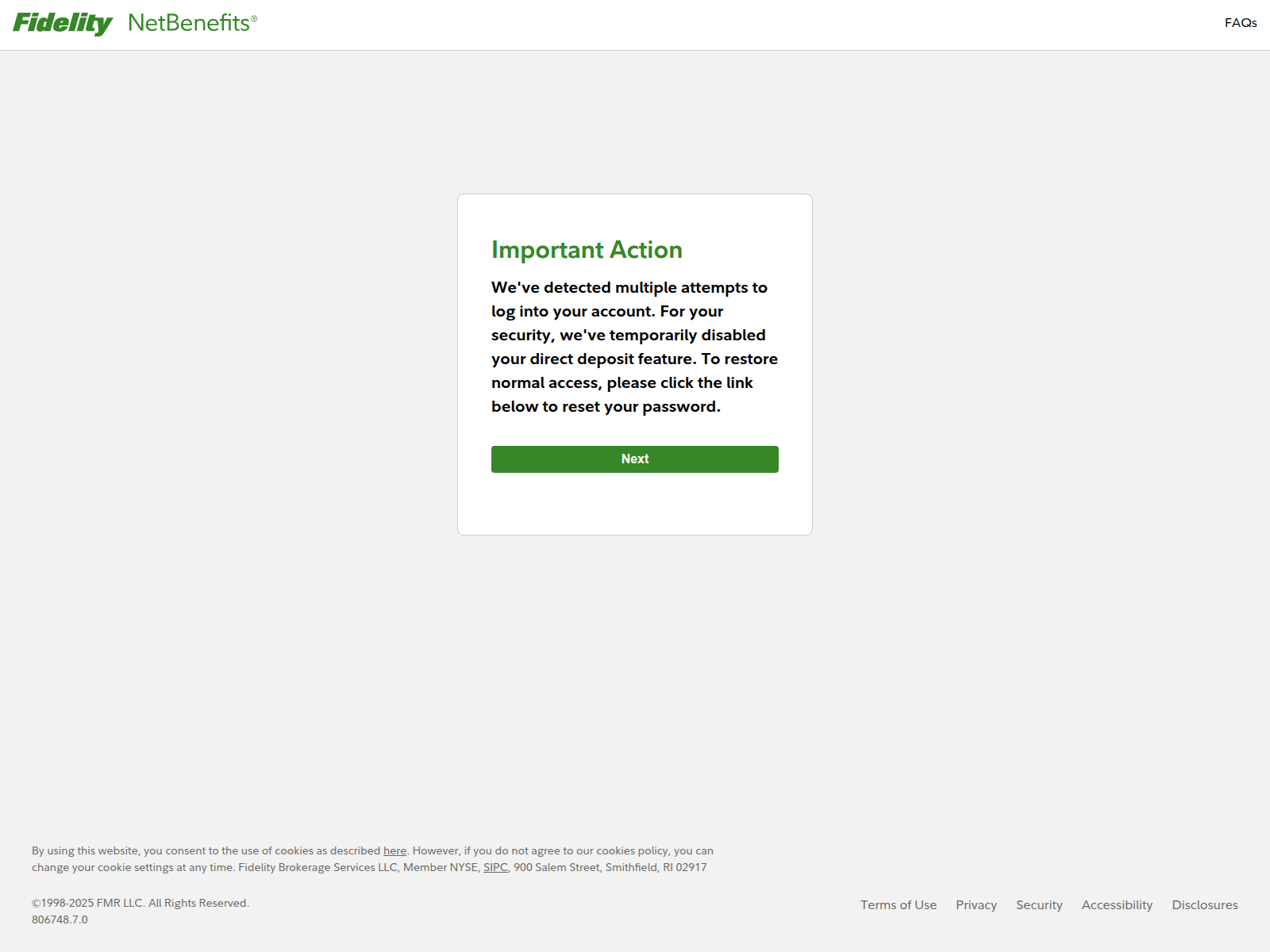
“Log In to Fidelity NetBenefits”
This domain, fidelityworkplacely.click, operates as a credential harvesting platform specifically designed to impersonate the legitimate Fidelity NetBenefits login portal. Analysis indicates the site presents a fraudulent interface to deceive users into submitting sensitive financial credentials, including usernames, passwords, and potentially multi-factor authentication codes. The threat actor’s objective appears to be unauthorized access to retirement accounts, employer-sponsored benefits portals, or other financial services managed through Fidelity’s infrastructure. The use of a login page title identical to the authentic Fidelity NetBenefits service increases the likelihood of successful deception, particularly among employees or plan participants expecting routine access to their accounts. Infrastructure analysis reveals multiple high-confidence indicators of malicious activity. The domain was registered on February 21, 2026, an anomalous future date suggesting potential registrar manipulation or domain generation algorithm abuse. It resolves to the IP address 43.162.124.172, hosted within autonomous system AS132203, a network segment previously associated with bulletproof hosting providers. Security vendors have flagged the domain in 18 out of 95 detection engines on VirusTotal, with additional listings on two independent security blocklists. The SSL certificate, identified as E8, lacks proper validation and does not correspond to Fidelity’s legitimate certificate authority chain, further confirming its fraudulent nature. Users who accessed fidelityworkplacely.click or entered credentials on the site should immediately initiate remediation protocols. Affected individuals must change passwords for all financial accounts, particularly those associated with Fidelity or employer benefits portals, using a secure, non-compromised device. Multi-factor authentication should be enabled or revalidated to prevent unauthorized access. Financial institutions and benefits administrators should be notified of potential exposure, and transaction histories should be reviewed for unauthorized activity. System-level scans for malware or keyloggers are recommended, as credential harvesting sites often deploy secondary payloads to maintain persistence. Organizations should also consider implementing domain monitoring to detect similar impersonation attempts targeting their user base.

10 fuentes externas supervisadas · instantánea del 11/08/2026
 Santa Clara, US
Esta IP de origen aloja múltiples dominios de phishing; la infraestructura puede compartirse entre campañas.
These domains also target Fidelity users. View all Fidelity threats →
Informes agregados recientemente de la base de datos PhishDestroy. Estos enlaces de descubrimiento no implican infraestructura ni propiedad compartida.
Si ingresó credenciales de cuenta, información personal o de pago, o descargó un archivo de este dominio, tome medidas inmediatas. A continuación encontrará recursos que le ayudarán a informar el incidente y protegerse.


Seleccione su país para obtener contactos oficiales de cibercrimen o crear un borrador de queja →.
Análisis de amenazas utilizando listas de bloqueo almacenadas, WHOIS, DNS y evidencia de escaneo público
Escanear ahoraEnvía los dominios sospechosos a nuestra base de datos de amenazas: protege a la comunidad
DenunciarInformes de phishing recientes y cambios de disponibilidad observados
MonitorizarSupervisa las amenazas en tiempo real o impugna esta entrada si crees que se trata de un falso positivo.