$100K Returned — Malvertising Scam Foiled
Russian scammers impersonated a crypto project via malvertising and stealer malware. We detected the operation, restored wallet access, and returned over $100K. The extra recovered funds were donated to @_SEAL_Org. Below: breakdown, IOCs, and lessons.
Overview
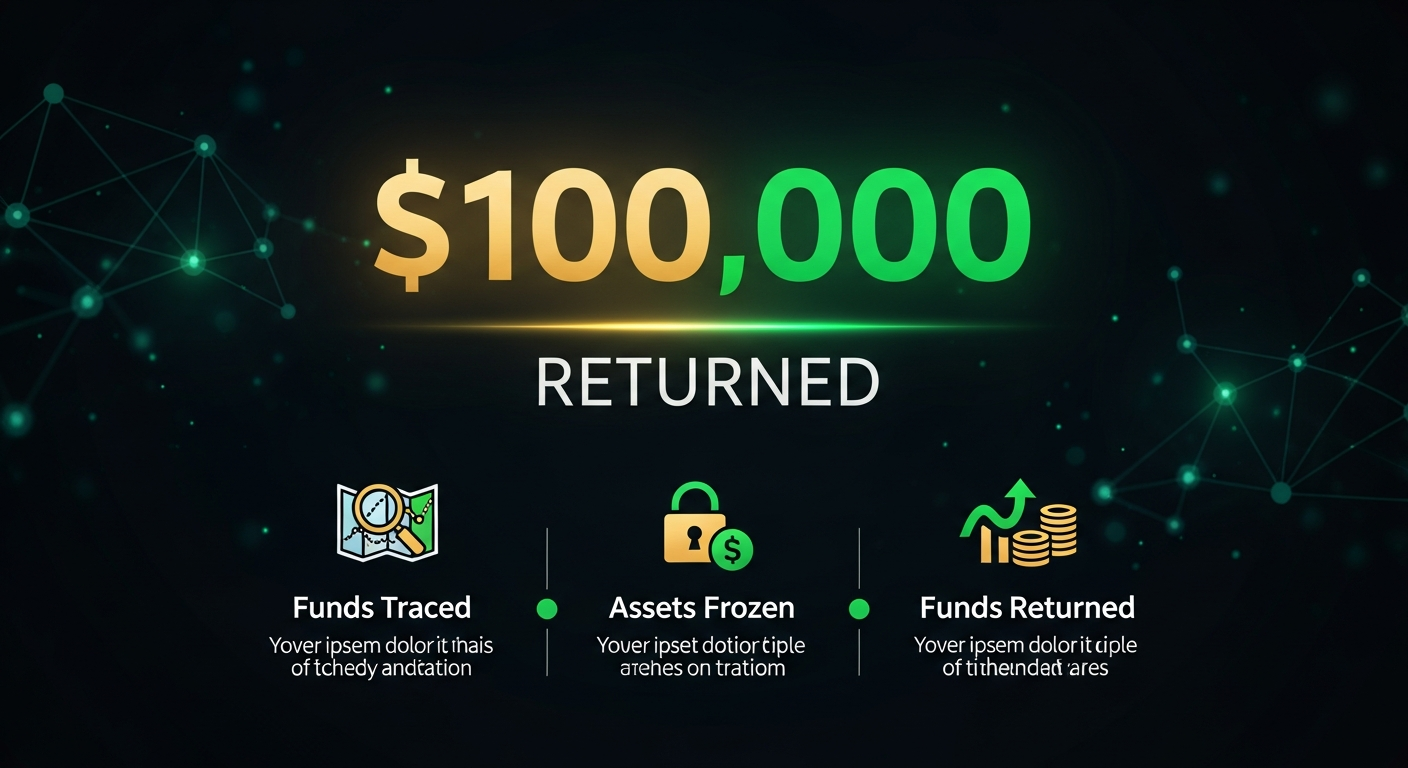
A cryptocurrency project fell victim to a social engineering attack disguised as a legitimate advertising partnership. PhishDestroy restored wallet access and recovered over $100,000 in compromised funds, then redirected the offered reward to an external organization to maintain independence.
What You Need to Know
- The wallet was already compromised; funds had already been moved.
- Access was restored and $100K+ was prevented from remaining with the attacker.
- The project offered a reward, which was declined and directed to @_SEAL_Org instead.
- This work is conducted independently as an operator effort, not as paid employment.
How the Scam Operated
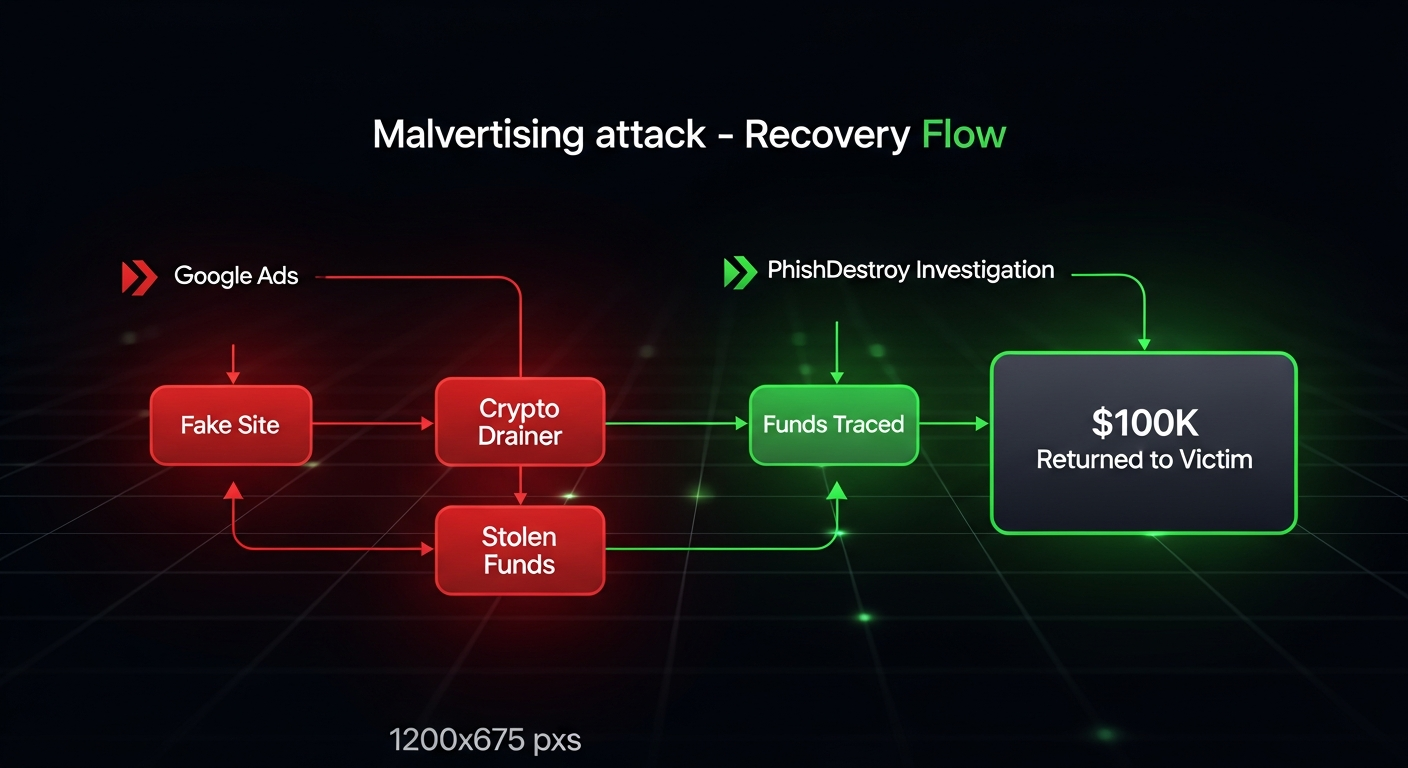
- Victim received a partnership/advertising proposal for a crypto game.
- Attack appeared credible: professional website, established X (Twitter) presence, legitimate-seeming video calls.
- During calls, attackers requested installation of a "workplace viewer" to access materials.
- The "viewer" was stealer malware.
- Attackers withdrew funds, swapped tokens across chains, and moved assets to their own wallet.
Response Actions Taken
- Confirmed compromise and halted further movement.
- Restored wallet access for the rightful owner.
- Secured and reassigned control of attacker's receiving wallet to victim team.
- Coordinated follow-up steps to reduce residual risk.
Post-Incident Hardening
Device Security
- Step-by-step guidance for handling infected devices safely
- Network isolation, session revocation, credential/key rotation, clean rebuild plan
Operational Setup
- New, clean workstation dedicated to wallet operations
- Fresh OS, vendor-only downloads, hardware wallet, minimal extensions, separate browser profile, 2FA
Forensics Preparation
- Disk snapshots and system/app log collection guidance
- Evidence preservation for potential legal investigation
Understanding "Adverting"
Adverting is business-style social engineering where criminals imitate normal workflows (ad buys, partnerships, PR) to trick installation of malicious "clients."
Common warning signs:
- "Install our ad manager/helper to sync creatives"
- "Use our custom Zoom/Telegram client for the call"
- "Open our media kit/NDA via a secure viewer"
The Reward and Independence
- The project offered a reward because recovery exceeded the initial loss.
- PhishDestroy declined to keep the reward.
- The entire surplus was directed to @_SEAL_Org.
- This maintains independence — no funding streams or obligations.
Core Principles
- Independence only — no budgets or strings attached.
- Results-focused approach over discussion.
- Opposition to any "special clients" or unverified software.
- Selective disclosure that helps victims, not threat actors.
- Direct pressure on attacker infrastructure.
Practical Recommendations
For Projects & Teams
- Never install workplace viewers/clients/updaters from unverified third parties.
- Obtain Zoom/Telegram only from official vendor sites.
- Avoid sponsored links for wallets, bridges, airdrops.
- Prefer hardware wallets with offline seed storage.
- If compromised: revoke sessions, move funds, rotate keys, re-issue secrets, seek help immediately.
For the Community
- Report suspicious activity via our Telegram bot.
- Access critical action guidance and resources at phishdestroy.io/critical-action.
Conclusion
Despite funds already being moved, PhishDestroy restored access and ensured the attacker could not retain the stolen assets. By declining the reward and directing surplus funds elsewhere, the organization maintains its unpaid, independent operational model focused on rapid, effective incident response.